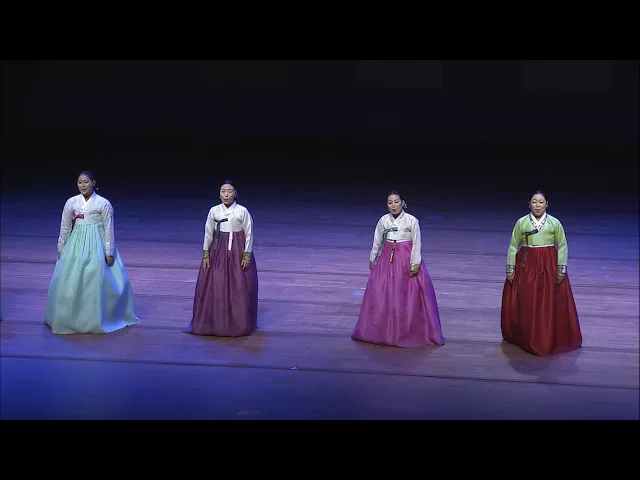
Two Faces of Korean Masculinity: Nam Jin and Na Hoon-a
Trot, Rivalry, and the Making of Male Stardom
The smell of dust after spring rain. The sweet, savory smell of snacks at a highway rest stop. The particular scent of gasoline near the pumps.
And on the way back to my dad’s car after using the restroom, there was always the sound of some nameless trot song playing in the background, bright and bouncy.
These are the scenes that naturally come back to me when I think of family outings from my childhood.
A Familiar Sound, A Complicated Origin

Trot is often treated as music that belongs to an older generation, something past its prime. But for me, and probably for many Koreans, trot is both close and distant, something woven into life and memory. It played at rest stops, amusement parks, on tour buses, in the family car, and even at tourist sites abroad where groups of Korean travelers were expected to pass through. It was so familiar that I had rarely stopped to think about it. But inside that music are the ways Koreans have imagined love, parting, time, and life itself. In that sense, trot feels less like “old music” than a kind of collective memory. It is not simply tacky or outdated. It is closer to a cultural archive that has been with us for so long that it has almost disappeared from view.
Trot is often thought of as one of the most Korean forms of popular music, a genre that carries a distinctly Korean emotional register. But if we trace its origins, it becomes difficult to explain it through any idea of “pure Koreanness.” The Encyclopedia of Korean Culture defines trot as a form of popular music that developed during the Japanese colonial period under the influence of Japanese enka. It explains that the genre took shape through translations and adaptations of Japanese enka, that original Korean compositions began to appear around 1930, and that by the mid-1930s it had settled into a recognizable style of popular song. At the time, this music was not yet called “trot.” It circulated within a broader category of colonial-era popular songs, often referred to as yuhaeng-ga or yuhaeng sogok. The Encyclopedia of Korean Culture entry on Korean popular music also explains that popular music during the colonial period developed through the coexistence of several styles: trot, which adopted the musical language of Japanese popular song; shin minyo, which combined folk idioms with foreign musical elements; and jazz songs, which drew on Western styles such as jazz, blues, and tango. In other words, colonial-era popular music was, from the beginning, an urban product in which Korean, Japanese, and Western elements were already mixed together.
What matters here is that Japanese influence was not simply a matter of musical style. In colonial Korea, Japanese culture was both the culture of the ruling power and the medium through which modern urban culture was encountered. Record companies, radio, theaters, newspapers, magazines, and performance venues, the channels of modern cultural industry, often entered Korea through Japan or were deeply tied to Japanese capital and colonial institutions. So when Korean audiences received Japanese-style popular songs, it was not simply because they “liked Japanese songs.” It is more useful to understand this reception in relation to a historical environment in which the modern, the urban, the sophisticated, and the fashionable often appeared through Japan. Japanese culture functioned as a culture of domination, but also as a form through which modern desire was organized. Korean audiences did not merely imitate it one-sidedly. Within the realities of colonial life, they translated it, adapted it to Korean sensibilities, and remade it into Korean songs.
In “Twentieth-Century Korean and Japanese Popular Music as Global Cultural Heritage: Trot, Enka, and Gayo,” Park Jin-soo argues that although trot and enka are now often regarded as traditional popular music genres unique to Korea and Japan respectively, they can also be understood as “twin genres,” forms of music that were born and developed within the same system of imperial Japanese cultural industry in the early twentieth century. The two genres took shape amid the media revolutions of records and radio in the 1920s and 1930s, the record industry of imperial Japan, the urban popular culture of colonial Korea, and shared East Asian modes of emotional expression. Only after liberation were they separated and named as national musical forms, “Korean trot” on one side and “Japanese enka” on the other.
Jang Mi-kyung’s “A Study on Enka Sung in Colonial Korea: Focusing on Koga Masao” also explains that Koga Masao’s songs were widely translated and sung in Korea around the 1930s, and that his so-called “Koga melody” had a major influence not only on Japanese popular music but also on Korean popular song. What is interesting, however, is that this influence was not entirely one-directional. The study also notes that Koga himself spent part of his childhood in Korea, and that Korean traditional folk songs and popular songs formed part of the foundation of his musical sensibility. In that sense, the relationship between trot and enka is far more complicated than the simple idea that “something Japanese entered Korea.”
So when speaking about the origins of trot, what matters is not the search for an original source. What matters is the historical conditions under which the genre was formed. Trot emerged through the entanglement of Japanese popular music during the colonial period, Korean popular song and folk sensibilities, Western rhythmic terminology, and the modern record industry. It touches something deep in Korean emotional life, but that “Korean” feeling did not arise in a pure, isolated state. Trot became one of the most persistent forms in Korean popular music through a process of translation, reception, contestation, and reinterpretation.
This is what makes trot so interesting. It reaches deep into Korean feeling, yet it was formed in a place where colonial power, attraction and discomfort toward Japanese popular culture, Western rhythmic names, the modern record industry, Korean folk sensibilities, and melodramatic emotion all overlapped. Trot is not simply Japanese, and it is not simply Korean either. It is closer to a modern sound that passed through the culture of the colonizer and was then turned back into the feeling of people’s own lives. Because of that hybridity and contradiction, trot may have become even more Korean.
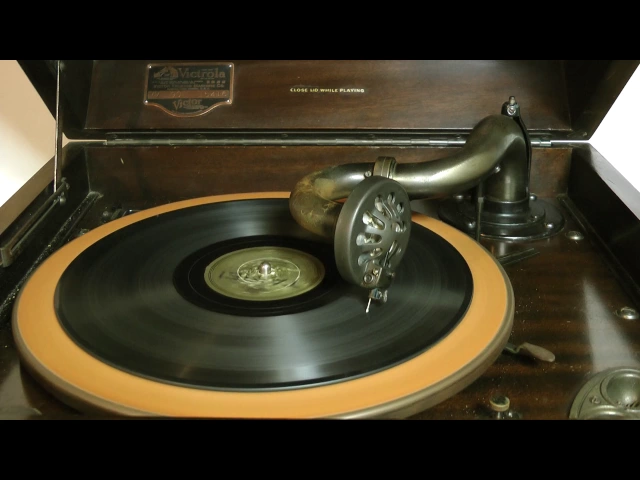
If you listen to the National Gugak Center’s version of 〈Arirang〉 alongside the 1934 Taihei Records version of 〈アリランの唄〉, you can hear the same melody in two very different styles. Through Japanese lyrics and popular-song-style arrangement, the Korean folk song 〈Arirang〉 takes on a different texture.
A Rivalry That Made a Genre
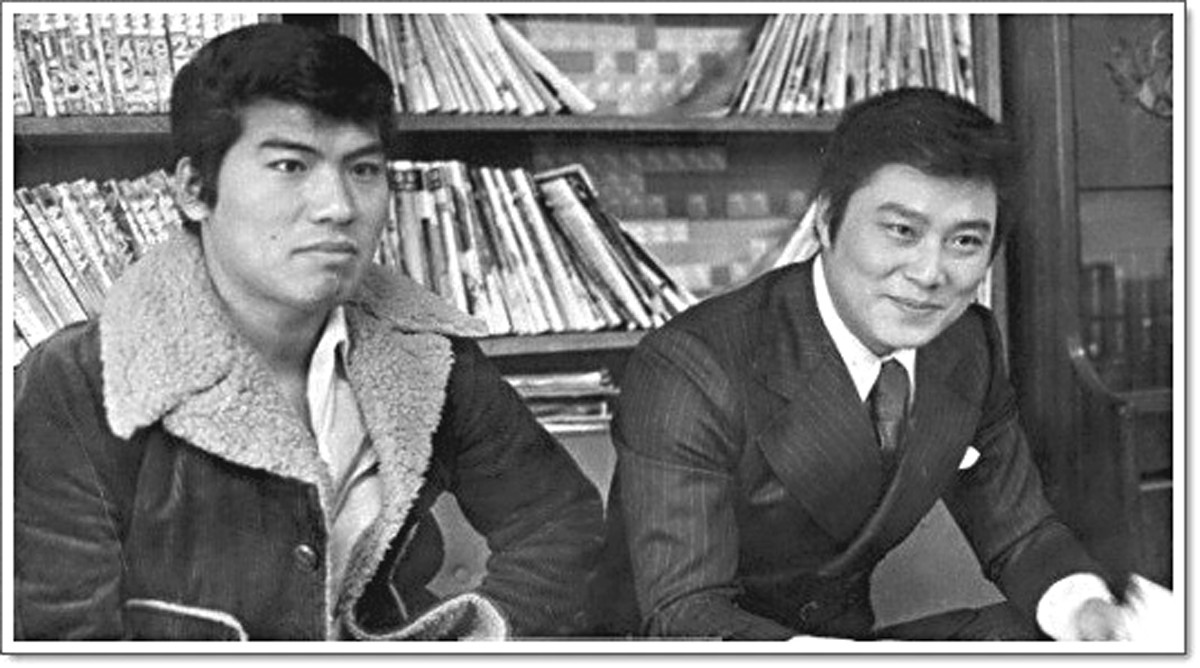
In the history of trot, the rivalry between Nam Jin and Na Hoon-a was never simply a question of who was more popular. It went beyond personal competition between two stars and became an event that had a real impact on the revival of trot as a genre and on the expansion of Korean popular culture. Often, when a culture catches fire, two opposing figures appear. Just as many stories in the world unfold around two opposing poles, popular culture also tends to burn hotter when there are two faces to choose from. People do not simply stop at listening to songs. They choose a side, attach their feelings to that choice, and take part in the competition, hoping that the star they love will succeed even more. The rivalry between Nam Jin and Na Hoon-a moved the trot market of the 1970s in exactly that way.
As the two men’s popularity collided, the record market and concert halls grew hotter than ever. Recitals were no longer consumed as mere performances, but as arenas of competition. Who drew the larger audience, who received the louder cheers, who commanded the stronger fandom, all of this became an event in itself. As they held performances in the same venues, as posters went up across the city, and as the press amplified the rivalry, Nam Jin and Na Hoon-a each became more than one singer. They became two camps. Fans were not only consuming their songs. They were also consuming the images, attitudes, and forms of masculinity that the two men represented.
This rivalry also looks like an early form of fandom culture, something that went beyond ordinary publicity. There are stories of fans reacting sensitively if one singer’s face was placed differently or partially covered on recital posters. There are stories of organized groups of female fans, nicknamed oppa budae, who cheered, protested, and defended their stars. There are stories of around 100,000 recital posters being distributed across an entire city for a single performance. These anecdotes show that the competition was not just a matter of musical taste. Fans wanted to protect the singer they loved, lift him up, compare him against the rival camp, and prove his superiority. It would be too simple to equate this directly with today’s K-pop fandom culture, but it is fair to read it as one of the early scenes in Korean popular music where fans began protecting a star’s image, intensifying competition, and building a story around that star.
One event that shows just how overheated this rivalry had become was the attack on Na Hoon-a. At the time, rumors circulated that Nam Jin had been behind the incident, and in the process the atmosphere between the two fandoms became even more hostile. The rumor was never confirmed as fact, but what matters is that people were willing to consume it as plausible because the rivalry between the two singers had already become so intense in the public imagination. Rivalry narratives are often consumed in a form more dramatic than reality itself. People sometimes find the competition more thrilling than the songs, the showdown more exciting than the performance, the camp more compelling than the singer. The relationship between Nam Jin and Na Hoon-a also became a kind of drama, tangled up with musical competition, fan emotion, media excitement, and opposing star images.
In this sense, the rivalry between Nam Jin and Na Hoon-a holds an important place in the history of trot as a genre. They did not allow trot to remain merely a form of music shaped by a particular historical period and emotional register. They pulled it into the energy of the star system and fandom. To like Nam Jin or to like Na Hoon-a was not simply a matter of musical preference. It became a choice between different star images and different forms of masculinity. Nam Jin’s polished, urban stage presence and Na Hoon-a’s earthy, emotionally charged presence organized fans’ feelings in different ways. As a result, their competition helped strengthen not only the commercial success of trot, but also the genre’s staying power and popular vitality.
In the end, the rivalry between Nam Jin and Na Hoon-a remains one of the crucial scenes in the history of Korean popular music. It was a commercial event that helped fuel the rise of trot, and at the same time, it showed how a culture of fans gathering around singers, cheering for them, competing through them, and building stories around them could begin to take shape. It may not have been identical to today’s K-pop fandom culture, but the original energy was already there. The desire to see the singer I love succeed. The competitive urge to cheer louder than the other side. The feeling that a star’s image could become part of my own taste and identity. The rivalry between Nam Jin and Na Hoon-a showed just how powerful those emotions could become inside Korean popular music.
Two Modes of Performing Masculinity
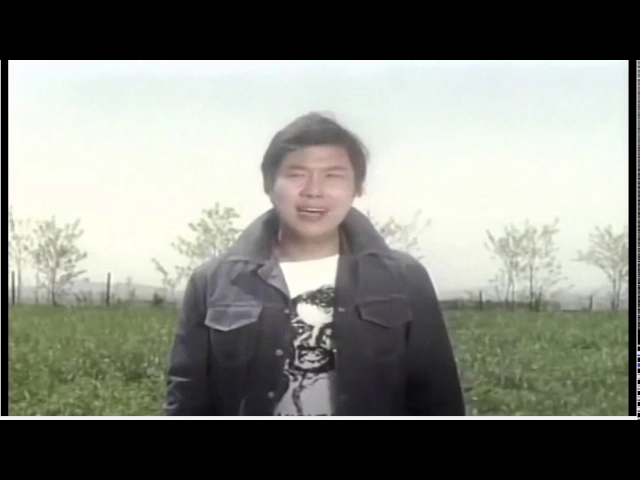
“저 푸른 초원 위에 그림 같은 집을 짓고
사랑하는 우리 님과 한 백 년 살고 싶어”“I want to build a picture-perfect house on that green meadow
and live there with my beloved for a hundred years.”Nam Jin, 〈님과 함께〉 / 〈With My Love〉, 1972
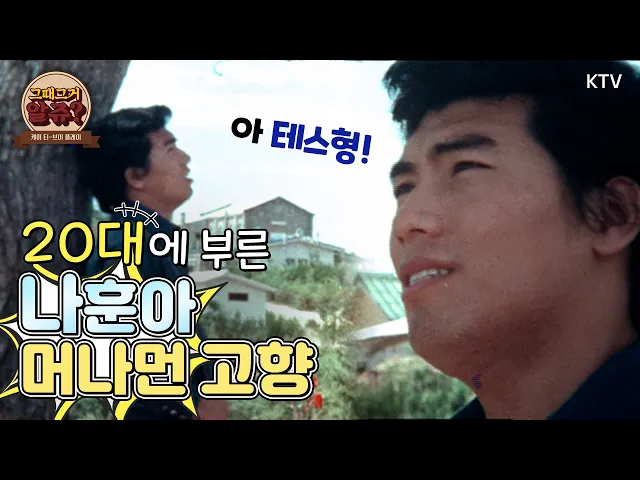
“천리타향 낯선 거리 헤매는 발길
한잔 술에 설움을 타서 마셔도
마음은 고향 하늘을 달려갑니다”“In a faraway land, my feet wander unfamiliar streets.
Even if I drink a glass of liquor mixed with sorrow,
my heart runs toward the sky over my hometown.”Na Hoon-a, 〈머나먼 고향〉 / 〈Distant Hometown〉, 1972
Apart from all of this historical significance, what interested me more was the fact that these two trot stars, who belonged to the same era, performed masculinity in completely different ways. If Nam Jin carried the face of a polished, urban “oppa” who would take care of you, Na Hoon-a was closer to a man who endures, carrying wounds, life, and the grief of having left home. One promised to take a woman into a comfortable world without hardship. The other sang, with a face that seemed to have survived time, of the sorrow held inside life and love. One feels like a young gentleman who might hand me a glittering life. The other feels like a country boy who has quietly passed through a hard one. Their difference was not simply a matter of singing style or hit songs. It revealed how Korean popular culture in the 1970s looked at, listened to, and desired men.
Nam Jin: Pop Stardom, Urban Desire
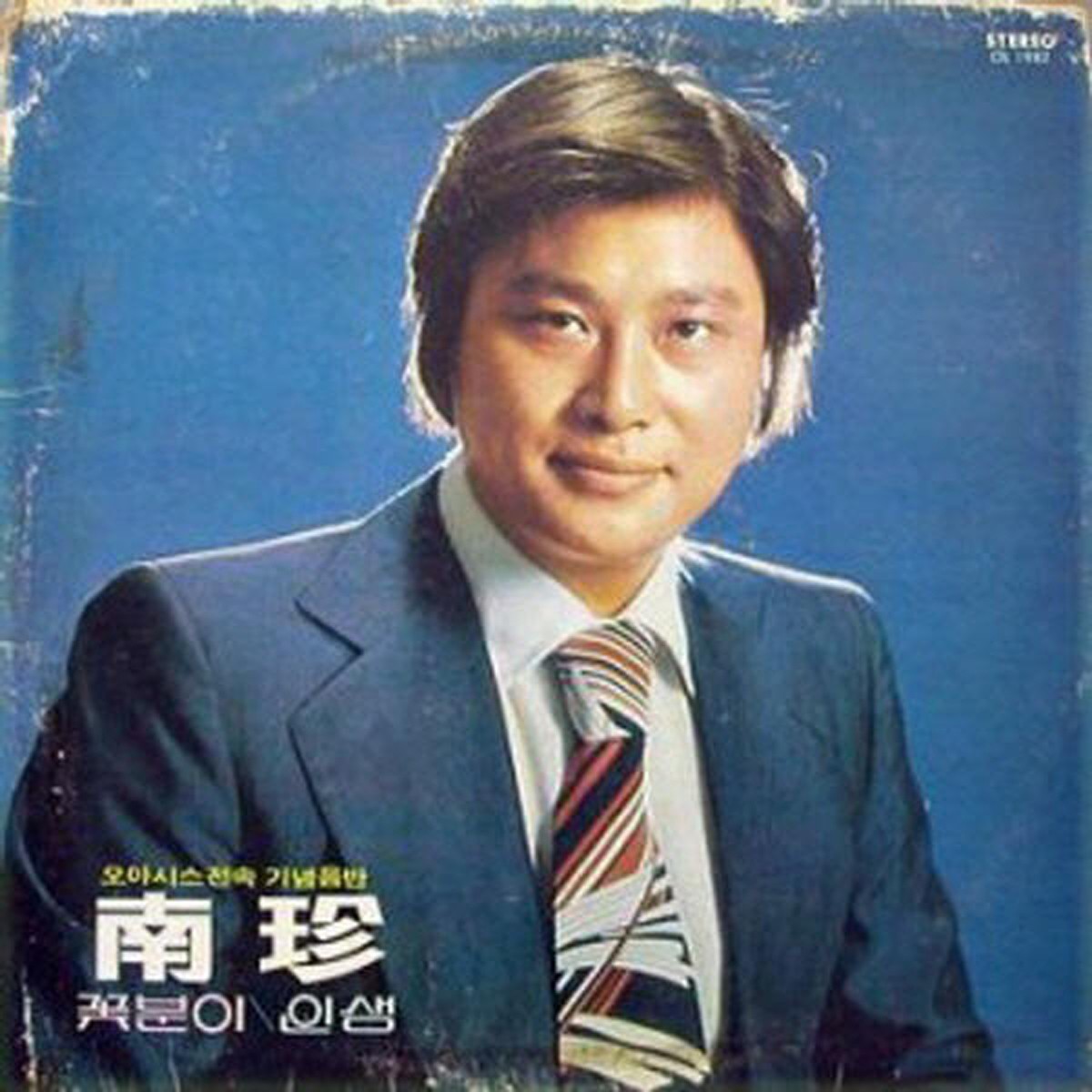
Nam Jin was born into a wealthy family in Mokpo, South Jeolla Province. His family is said to have owned a private car even in the 1950s, shortly after the Korean War, and he grew up with an early interest in theater and music. As a student, he enjoyed singing American pop songs by artists like Neil Sedaka and Paul Anka, and he later went to Seoul to study theater and film, hoping to become a movie actor. From the beginning, he was less a rustic young trot singer than a kind of young gentleman who naturally absorbed pop music, cinema, and an urban sensibility.
In 1965, Nam Jin made his debut with 〈Seoul Playboy〉, but the song did not receive much attention. His next song, 〈Yeonae 0-beonji〉, was also reportedly banned for being considered decadent. Interestingly, the song that first brought him to wider public attention was 〈Ulryeogo Naega Watna〉, a trot song he is said to have been reluctant to sing at first. Then, in 1966, 〈Gaseum Apeuge〉 became a major hit, and Nam Jin established himself as a star who moved between the music and film industries. He was not simply a trot singer with a rich, traditional voice. He was a full entertainer whose looks, dancing, acting, and stage manners all worked together.

One of the things often mentioned in relation to Nam Jin is the influence of Elvis Presley. According to a KBS documentary, there was a moment when Na Hoon-a announced a concert at the same venue where Nam Jin was scheduled to perform one month earlier, turning the situation into a direct confrontation between the two. As Nam Jin’s side tried to find a way to attract a larger audience, they reportedly looked to Elvis Presley, who was one of the biggest American stars of the time. The vocal interjections, the use of the pelvis in his dance movements, and the flashy, glittering stage costumes were all enough to call Elvis to mind. Along with rockabilly-style hits such as 〈Maeumi Gowayaji〉, his handsome face, movie-star image, and pop-star-like stage presence made him a very different kind of figure from the traditional trot singer.
Interestingly, the resemblance does not stop at the level of performance. Nam Jin later served in the Vietnam War, and whether intended or not, this also placed him within a kind of public masculine narrative that recalls Elvis Presley’s own military service. In both cases, the pop star’s body was not only displayed onstage as an object of desire, but was also folded into the language of national duty and patriotic masculinity. For Nam Jin, this added another layer to his image. He was not only the stylish oppa shaped by Seoul, cinema, pop songs, and stage lights, but also a male star whose public image could be linked to service, sacrifice, and the nation.
Nam Jin succeeded through trot, but his masculinity was less earthy than modern, urban, and to some extent imported through the image of the pop star. He was not the man carrying hometown and time on his back. He was a Korean-style “oppa” made through Seoul, cinema, pop songs, stage lights, and the national narratives that surrounded male stardom in that era.
Na Hoon-a: Hometown, Wounds, and Endurance

Na Hoon-a, on the other hand, carried a more earthy and lyrical image, the image of a man who held hometown, life, and wounds within him. There is some disagreement over the exact moment of his debut, but he is usually said to have debuted in 1966 with 〈Cheolligil〉. From the late 1960s onward, he began to make his name in a way that was quite different from Nam Jin. If Nam Jin built the image of a handsome oppa through pop music, film, and an urban stage sensibility, Na Hoon-a created a much denser and more singular voice through his heavy low register, piercing high notes, and his signature vocal bends.
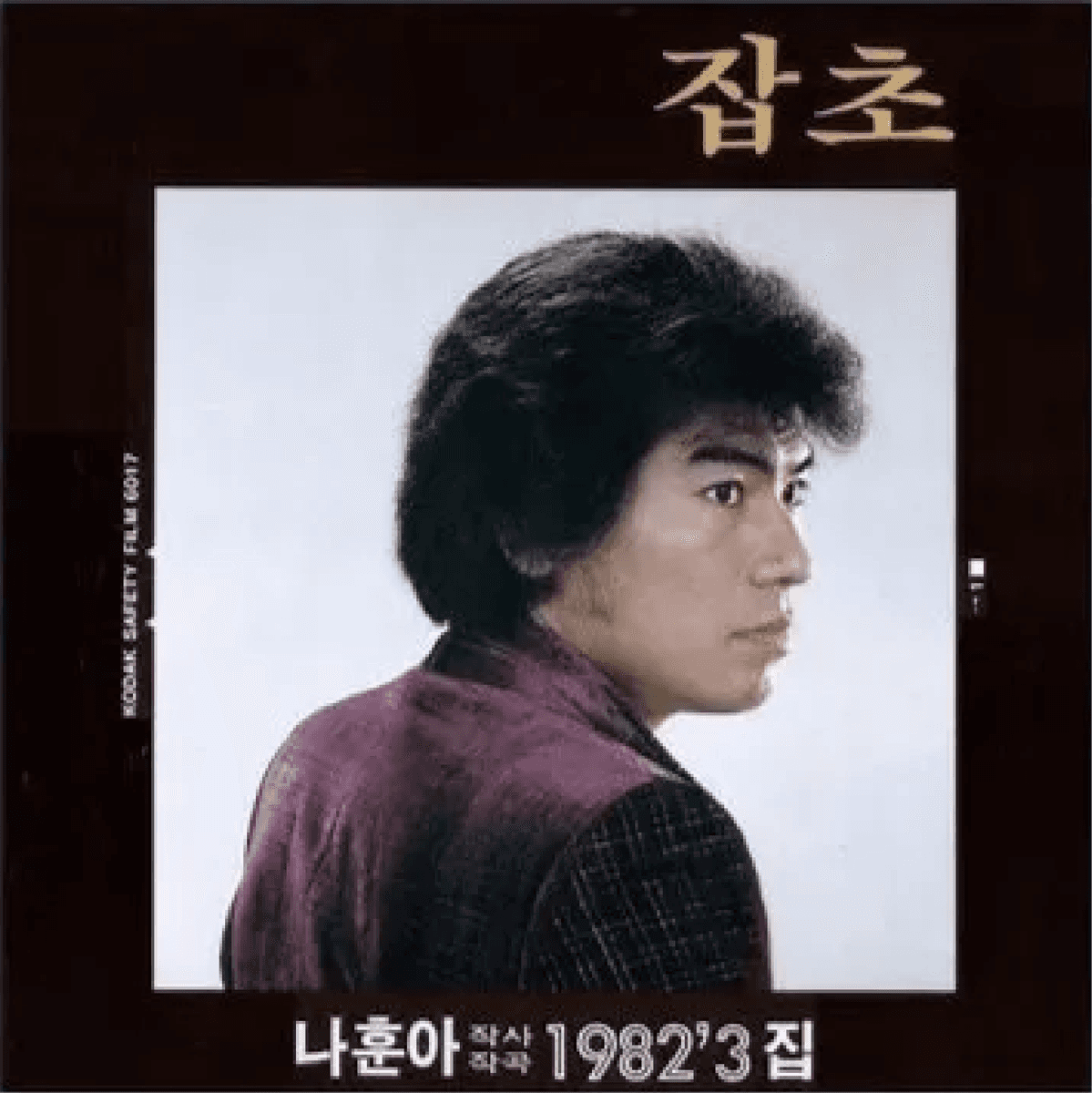
Na Hoon-a’s songs do include love, but that love often comes with the weight of an entire life. He does not sing like a man sweetly telling a woman, “I will do everything for you.” He sings more like someone who has already lost something, someone who has passed through time, someone who knows that life does not bend so easily to one’s will. His masculinity is less the polished image that shines on an urban stage than something mixed with the smell of earth, wounds, resignation, and stubbornness. His signature bending vocal style is not simply a display of technical skill. It sounds like the way a man twists and pushes up the grief and stubbornness inside him.
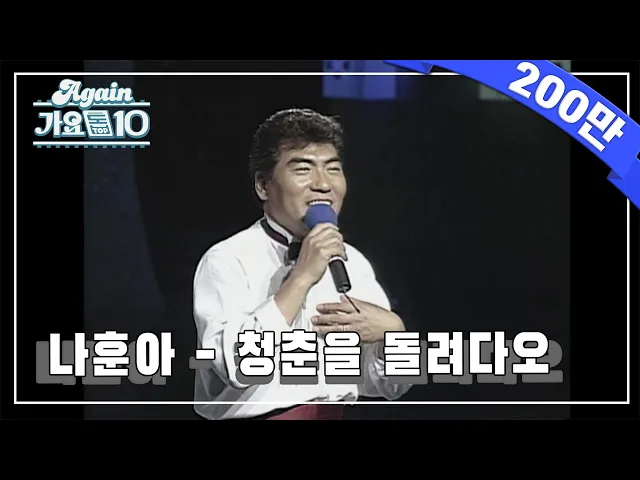
Na Hoon-a performing 〈Cheongchuneul Dollyeodao〉 / 〈Give Me Back My Youth〉 on KBS’s 1994 Lunar New Year special. In the first 45 seconds, he warmly engages with the audience, showing his charm and generous stage manner.
But Na Hoon-a’s appeal is not only melancholy or endurance. There is also a bold, playful, almost teasing quality to him. He can appear stubborn and macho, someone who refuses to soften himself too easily, yet onstage he knows exactly how to smile, loosen the mood, and melt the audience. That tension is part of his charm. He carries a strong masculine presence, but it is not cold. It is theatrical, generous, and always tuned in to the audience before him.
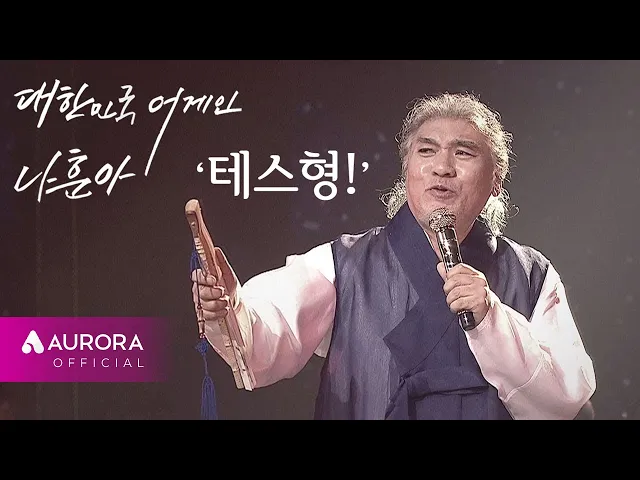
Na Hoon-a performing 〈Teseu-hyeong〉 / 〈Brother Socrates〉, his 2020 song asking Socrates about the meaning of life. The song went viral among younger generations for taking relatable existential questions and delivering them in his unmistakably bold, masculine style.
This image was also reinforced by the way Na Hoon-a built his musical world as a songwriter. He was not only a singer who performed songs written for him, but a singer-songwriter who wrote and composed many of his own songs. His catalogue is often described as enormous, with more than 120 hit songs commonly cited, and his body of work extends far beyond the familiar image of a traditional trot vocalist. This matters because Na Hoon-a’s masculinity was not only something placed upon him by the industry. He also authored much of the emotional world through which that masculinity appeared. The man who endured in his songs was, in many cases, also the man who wrote the terms of that endurance.
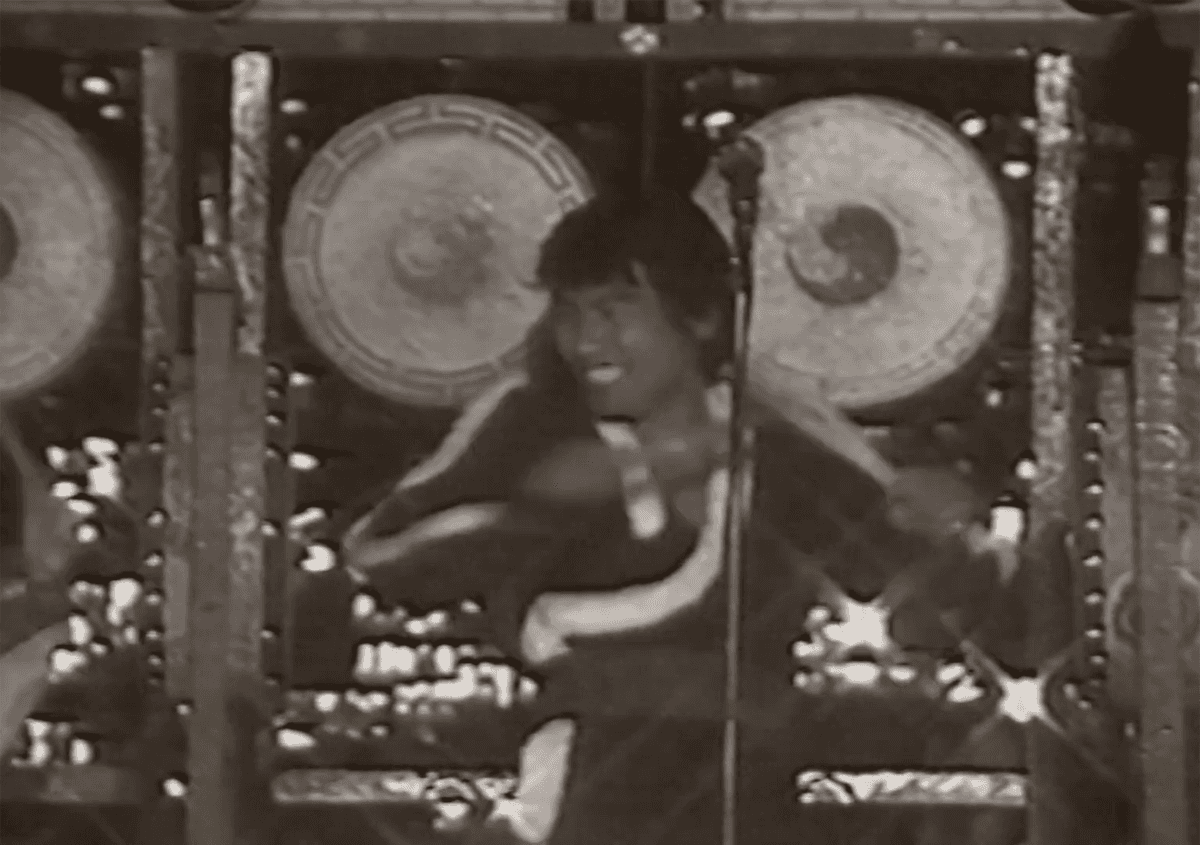
Na Hoon-a performing a Korean traditional drum dance.
Na Hoon-a, too, grew up in a well-off household. His father was a sailor on a trading ship, and it is said that there was a gramophone in the house when he was young. Even so, what the public saw in him was not an urban young gentleman, but a man carrying hometown and life on his back. This has less to do with his actual class background than with the kind of emotional world and the kind of face he chose to perform through song and onstage. Through his voice, lyrics, and performance, Na Hoon-a created the image of a man who had already lived, a man who had endured. In the recital confrontation mentioned earlier, he also chose Korean dance and drums, strengthening his existing image through a performance that drew on Korean tradition.
Diverging Paths After the Peak
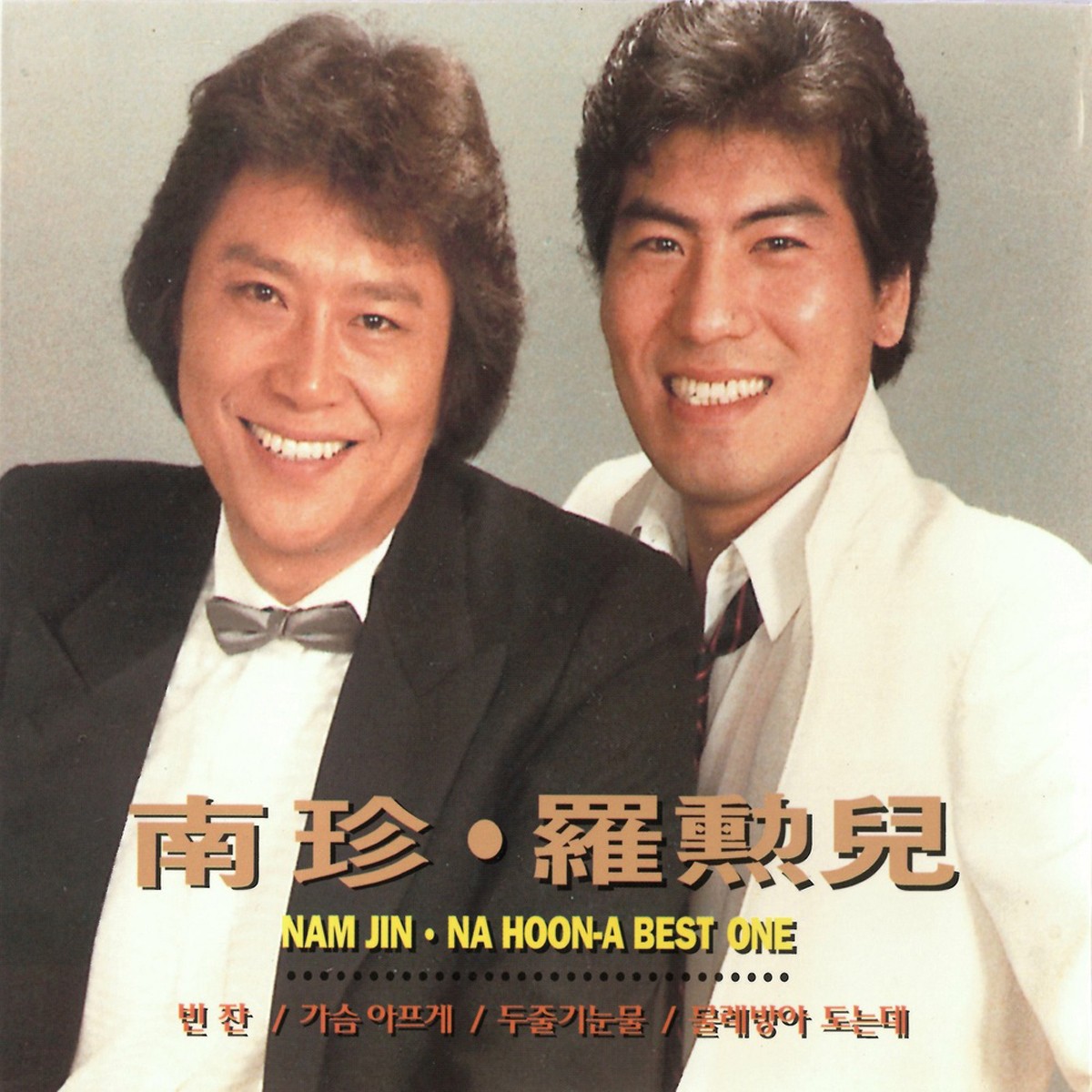
Their later careers also diverged in clear ways. Nam Jin maintained the position of a relatively familiar public star through television, variety shows, and collaborations with younger artists. Na Hoon-a, meanwhile, held onto a kind of mystique for a long time, making himself into someone not easily consumed. Rather than releasing new songs frequently, he centered his presence around concerts, rarely appeared on television, and dominated audiences with overwhelming charisma onstage. If Nam Jin was the oppa who stayed close to the public, Na Hoon-a was closer to a star kept at a slight distance. Perhaps that is why people saw in him not a charming oppa, but an affectionate man, a lonely man, and above all, a man who endures his own life to the end. This contrast begins in their representative songs of the 1970s, but it continues to be repeated and transformed in the songs they released later.
Love, Life, and the Roles Men Play
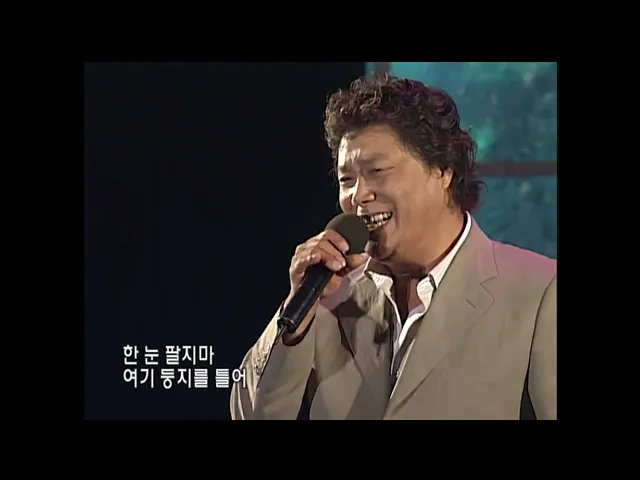
“너는 그냥 가만히 있어 다 내가 해 줄게 (…)
사랑이 뭔지 그동안 몰랐지 내 품에 둥지를 틀어봐”“You just stay still. I’ll do everything for you. (…)
You didn’t know what love was all this time. Come build your nest in my arms.”Nam Jin, 〈둥지〉 / 〈Nest〉, 2000
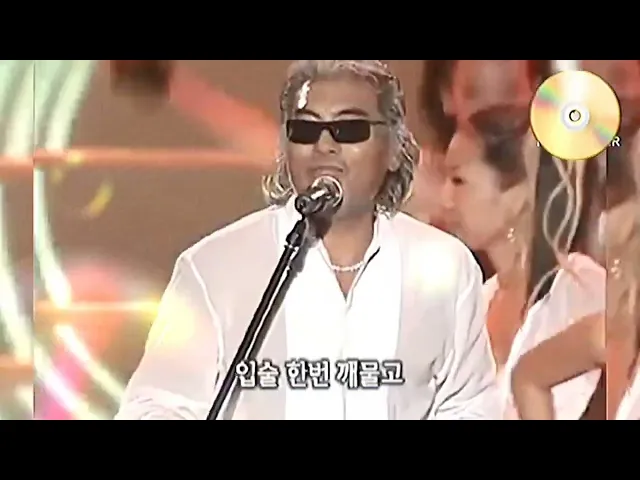
“때론 사랑에 빠져 비틀댄 적 있지만
입술 한 번 깨물고 사내답게 웃었다”“At times I stumbled after falling in love,
but I bit my lip once and smiled like a man.”Na Hoon-a, 〈사내〉 / 〈Man〉, 2004
Nam Jin’s male speaker often addresses a woman directly. The emotional logic is something like: “Trust me and follow me,” “I’ll take responsibility,” “You can live safely in my arms.” The masculinity that comes through in songs like 〈Nim-gwa Hamkke〉 / 〈With My Love〉 and 〈Dungji〉 / 〈Nest〉 is tender, but it is also a masculinity that holds the lead. He tells the woman that he will take her out of uncertainty and into a comfortable world. He is charming, relaxed, polished, and confident. Nam Jin’s man does not collapse in front of love. He moves forward. He promises a house, an embrace, a future. It is a masculinity that says, “I am here, so all you have to do is come with me.” Tender, but patriarchal. Romantic, but unwilling to give up control.
This is why Nam Jin’s masculinity takes the form of the “oppa who takes care of you.” Here, oppa is not simply an older man. It is a man who believes he can lead, protect, and take responsibility for a woman. He speaks as if he can build a world for her. Even when he confesses love, that love is often tied to the promise of a life. I will not leave you lonely. I will let you rest in my arms. If you come with me, everything will be all right. This masculinity is attractive. But its appeal also depends on a structure in which the man sets the direction and the woman follows. In Nam Jin’s songs, the woman is loved, but she is also invited into a decision the man has already made.
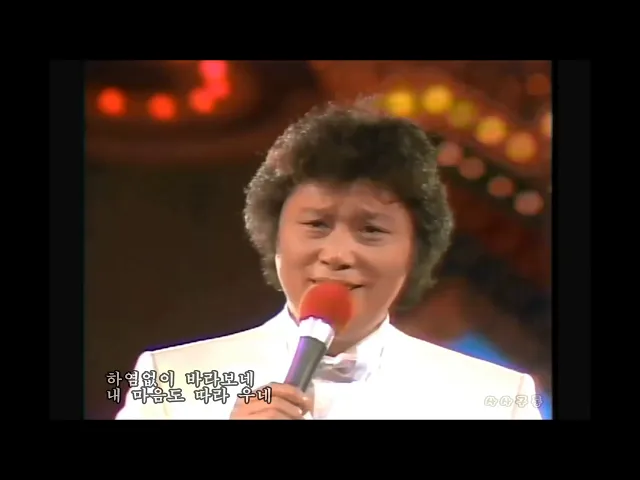
“그대의 싸늘한 눈가에 고이는 이슬이 아름다워
하염없이 바라보네 내 마음도 따라우네
가여운 나의 여인이여”“The tears gathering in your cold eyes are beautiful.
I gaze at them endlessly, and my heart follows.
My poor, beloved woman.”Nam Jin, 〈빈잔〉 / 〈Empty Glass〉, 1982
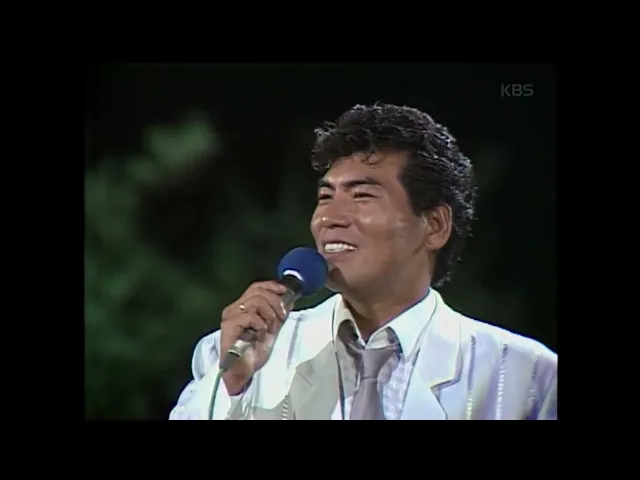
“흘러가는 뜬구름은 바람에 가고
허무한 내 청춘은 세월에 가네
취한 김에 부르는 노래 끝도 없는 인생의 노래
아 뜨거운 눈물 사나이 눈물”“Drifting clouds go with the wind.
My empty youth goes with time.
Drunk, I sing a song, an endless song of life.
Ah, these hot tears, a man’s tears.”Na Hoon-a, 〈사나이 눈물〉 / 〈A Man’s Tears〉, 1987
Na Hoon-a’s masculinity, by contrast, does not necessarily appear only in relation to women. Of course, he has many love songs, and those songs often carry intense feelings toward women. But his core image is closer to a man who has passed through life than to a man who leads the woman he loves. When I think of songs like 〈Gong〉 / 〈Emptiness〉, 〈Hongsi〉 / 〈Ripe Persimmon〉, 〈Namjaui Insaeng〉 / 〈A Man’s Life〉, and 〈Gojangnan Byeoksigye〉 / 〈Broken Wall Clock〉, Na Hoon-a’s man appears less as someone who takes another person somewhere, and more as someone who endures time, wounds, and resignation. Love is less a romantic promise than the eventual cause of tears. Life does not unfold according to plan. Only after it has passed does it leave its weight behind. Time, like a broken wall clock, seems to have stopped, and yet it still makes people grow old. Na Hoon-a’s man stands somewhere alone, both before love and before life.
This is what makes the difference interesting. If Nam Jin’s masculinity opens itself toward women, Na Hoon-a’s masculinity closes itself toward the world, or at least stands there enduring it. Nam Jin’s man wants to take the woman he loves to a better place. Na Hoon-a’s man looks back, as if he has already come too far. If Nam Jin’s songs are closer to “come with me,” Na Hoon-a’s are closer to “somehow, I ended up here.” For Nam Jin, love becomes a stage on which a man proves his ability. For Na Hoon-a, love and life become passages through which a man’s wounds are revealed. This difference creates two very different roles: one man protects by leading, while the other survives by enduring.
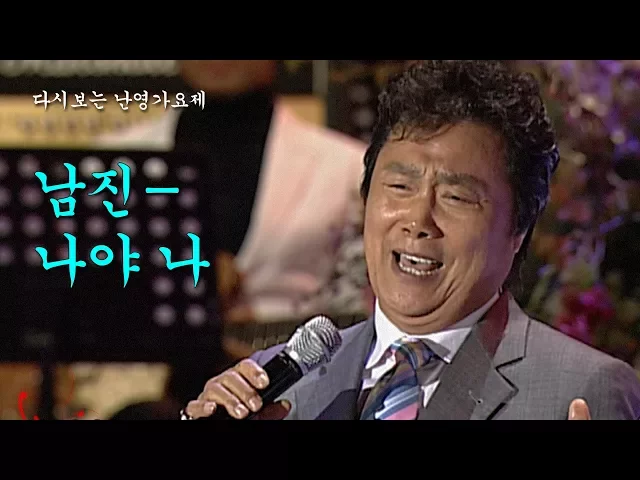
“나야 나야 나 나야 나야 나
밤 늦은 골목길 외쳐 보아도
젖은 그림자 바람에 밀리고
거리엔 흔들리는 발자국”“It’s me, it’s me, it’s me.
Even when I call out in the late-night alley,
my wet shadow is pushed by the wind,
and on the street, my footsteps waver.”Nam Jin, 〈나야 나〉 / 〈It’s Me〉, 2008
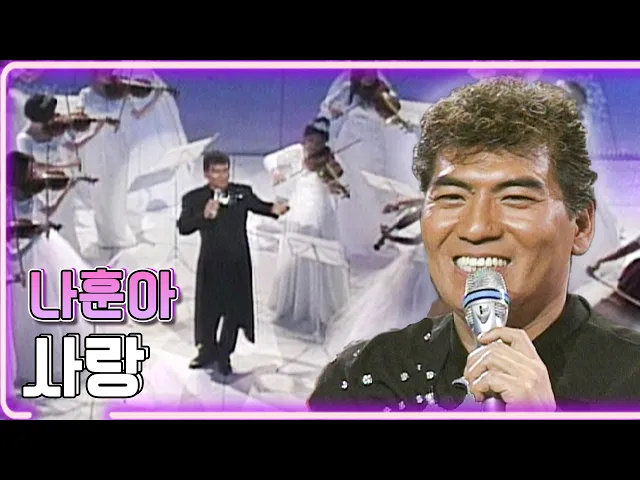
“비 내리는 여름 날에 내 가슴은 우산이 되고
눈 내리는 겨울 날에 내 가슴은 불이 되리라
온 세상을 다 준대도 바꿀 수 없는 내 여인아”“On rainy summer days, my heart will become your umbrella.
On snowy winter days, my heart will become your fire.
My woman, whom I would not trade for the whole world.”Na Hoon-a, 〈사랑〉 / 〈Love〉, 1983
Of course, this divide is never perfect. Nam Jin has sadness too, and Na Hoon-a also has playful, charming love songs. It is always risky to fix one person into a single image. But if we look at the representative images through which the public remembers them, the contrast clearly holds. Nam Jin is closer to a polished, modern man, an urban oppa who leads the woman he loves. Na Hoon-a is closer to an earthy, emotionally charged man, someone carrying the weight of life on his back. If Nam Jin translated foreign polish and star quality into a Korean form of masculinity onstage, Na Hoon-a sang hometown, han, time, and resignation through the face of a man.
What Remains After the Rivalry
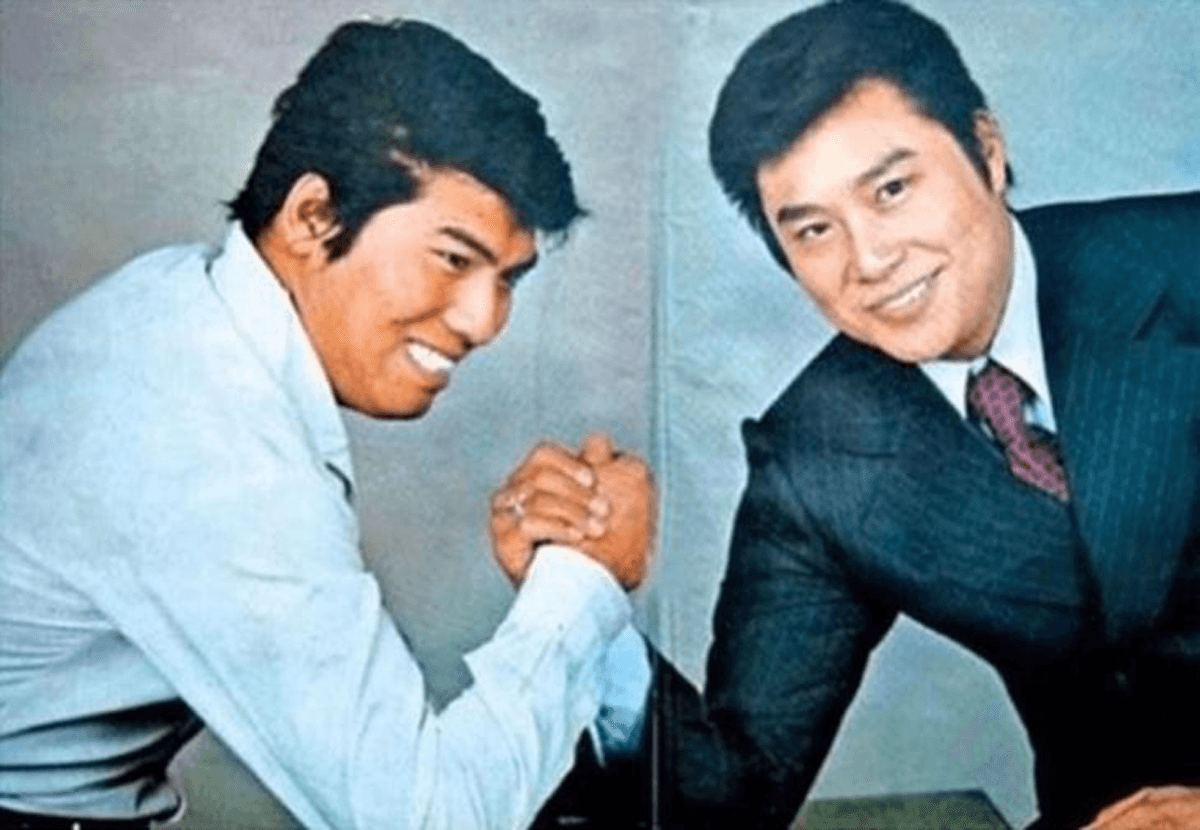
After their peak years, Nam Jin and Na Hoon-a took different paths, shaped by their personal lives and by the changes of the times. Private events such as marriage and divorce, the changing popularity of trot itself, and the passing of their own prime years as singers gradually pushed them in different directions. Nam Jin maintained his place as a relatively familiar public star through television, variety shows, and collaborations with younger artists. Na Hoon-a, on the other hand, built himself around concerts and mystique, becoming a figure not easily consumed. As discussed earlier, this also connects to the difference in how the two approached musical creation and life in the entertainment industry.
Of course, because both artists have continued their careers over several decades, it is difficult to place all of their songs side by side as if they belonged to the same moment. Even so, it is clear that the rivalry between Nam Jin and Na Hoon-a, as well as their musical careers, played an important role in the development of trot as a genre and, more broadly, in the expansion of the Korean popular culture industry. If trot developed by carrying the feelings of han, sorrow, love, resignation, hometown, and family through the turbulence of modern Korean history, then Nam Jin and Na Hoon-a performed and embodied two different forms of masculinity that the times demanded and desired. Korean popular culture consumed and amplified those masculinities, turning the two men into more than singers. It turned them into star narratives.
If Nam Jin was “the man who takes you somewhere,” Na Hoon-a was “the man who endures.” If Nam Jin carried the face of a modern, urban, tender patriarch, Na Hoon-a carried the face of an earthy, emotionally charged, wounded survivor. Nam Jin’s man promised to take the woman he loved into a more comfortable world. Na Hoon-a’s man sang with the weight of time, hometown, and life on his back. One protected by leading. The other survived by enduring.
The difference between them also reflects the different faces Korean society has expected from men. The man who must take responsibility and lead. The man who must endure in silence. The man who must be tender in love, yet not collapse too easily before life. Nam Jin and Na Hoon-a performed those demands onstage in different ways. Listening to their songs, the public also felt through its own love, family, responsibility, pride, wounds, and passing time.
This is why trot is not merely music of nostalgia for older generations. It is a genre layered with the ways Korean society has spoken of love and parting, remembered hometown and family, and imagined masculinity and the weight of life. Within that genre, Nam Jin and Na Hoon-a performed different masculinities, each offering comfort and representation for the desires and exhaustion of an era. Their songs are not simply popular songs. They are closer to a cultural archive, a way for an era to remember itself and preserve the feelings it lived through.
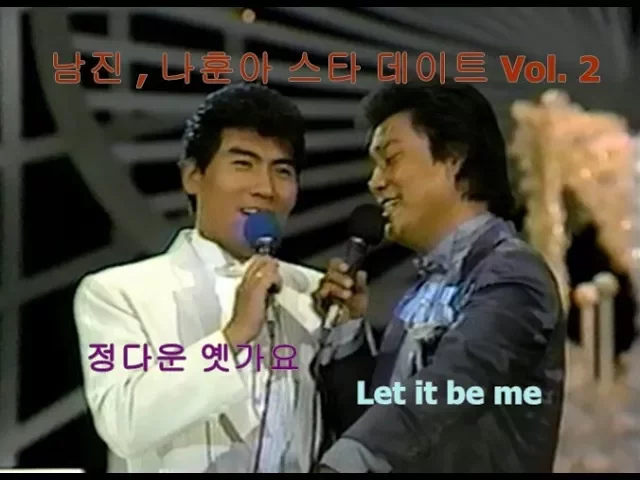
Nam Jin and Na Hoon-a singing 〈Let It Be Me〉 together. Starts around 10:46.
Finally, I want to close with a video of Nam Jin and Na Hoon-a singing The Everly Brothers’ 〈Let It Be Me〉 together. There is something strangely moving about seeing two men long remembered through the story of rivalry standing on the same stage, singing the same song. “Now and forever, let it be me.” Having passed through an era with two very different faces, they ultimately remain together as voices that came to represent that time.
Works Consulted
• Academy of Korean Studies. “Trot.” Encyclopedia of Korean Culture.
• Academy of Korean Studies. “Popular Music.” Encyclopedia of Korean Culture.
• Park, Jin-soo. “Twentieth-Century Korean and Japanese Popular Music as Global Cultural Heritage: Trot, Enka, and Gayo.” Asian Cultural Studies, vol. 67, 2025, pp. 5–22.
• Jang, Mi-kyung. “A Study on Enka Sung in Colonial Korea: Focusing on Koga Masao.” Journal of Japanese Studies, vol. 45, 2015, pp. 57–74.
• KBS. Na Hoon-a vs. Nam Jin: 50 Years of Rivalry, Opening the Golden Age of Trot. Documentary footage.
• National Gugak Center. “Arirang.” Video recording.
• Taihei Records. 〈アリランの唄〉, performed by Yokota Ryoichi, 1934.
• Additional video materials embedded in the post include performances of Nam Jin’s 〈님과 함께〉, 〈둥지〉, 〈빈잔〉, and 〈나야 나〉; Na Hoon-a’s 〈머나먼 고향〉, 〈사내〉, 〈사나이 눈물〉, 〈사랑〉, and 〈테스형!〉; and Nam Jin and Na Hoon-a’s joint performance of The Everly Brothers’ 〈Let It Be Me〉.
Image Credits
• OhmyNews. Archival image from the section “A Familiar Sound, A Complicated Origin.”
• Kukmin Ilbo. Archival image from the section “A Rivalry That Made a Genre.”
• Nam Jin, Jeonsok Ginyeom Eumban (Hyeong), 1978. Album cover, Oasis Records. Source: Apple Music / Bugs.
• Nam Jin, Geudaeyeo Byeonchimao, 1973. LP cover, Jigu Records. Source: Apple Music / Discogs.
• Na Hoon-a, Golden Hits Parade Vol. 1, 1972. Album cover, Oasis Records. Source: Apple Music / Discogs.
• Na Hoon-a, Vol. 3, 1982. Album cover; includes “Japcho” / “Weeds.” Source: Discogs.
• KBS. Still from Na Hoon-a vs. Nam Jin: 50 Years of Rivalry, Opening the Golden Age of Trot. Source: KBS / YouTube.
• Nam Jin and Na Hoon-a, Best One / Best Part 1. Compilation album cover. Source: Amazon / Tidal.
• Maeil Business Newspaper / Daum News. Archival image of Nam Jin and Na Hoon-a in an arm-wrestling pose, reproduced in “[그때 그 사람] 남진·나훈아의 라이벌시대.”
AI Use Disclosure
AI was used as an editorial aid in the process of translating, locating academic references, and organizing section headings. The central argument, interpretation, and final editorial decisions are my own.