Cargo Cults and Hainuwele: Stories That Explain Lost Abundance
A placeholder essay on restraint, whitespace, and minimal structure in visual design.
“In the South Seas there is a Cargo Cult of people. During the war they saw airplanes land with lots of good materials, and they want the same thing to happen now. So they’ve arranged to make things like runways, to put fires along the sides of the runways, to make a wooden hut for a man to sit in, with two wooden pieces on his head like headphones and bars of bamboo sticking out like antennas—he’s the controller—and they wait for the airplanes to land. They’re doing everything right. The form is perfect. It looks exactly the way it looked before. But it doesn’t work. No airplanes land. So I call these things Cargo Cult Science, because they follow all the apparent precepts and forms of scientific investigation, but they’re missing something essential, because the planes don’t land.”
— Richard Feynman, “Cargo Cult Science,” Caltech Commencement Address, 1974.
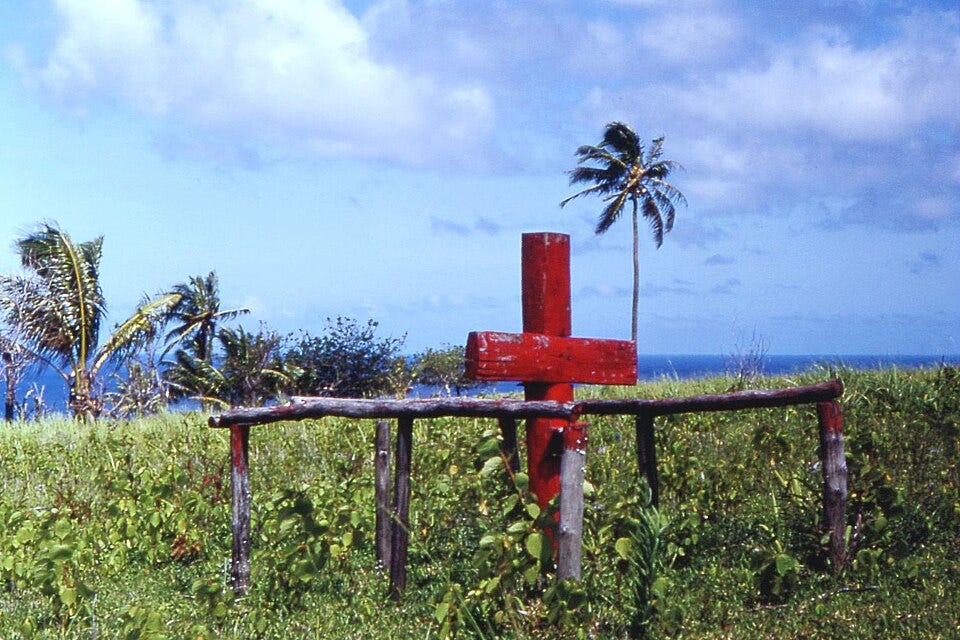
In his 1974 commencement address at the California Institute of Technology, Richard Feynman spoke about the cargo cults of the South Pacific. During the war, islanders had seen airplanes land and unload all kinds of supplies, and because they wanted the same thing to happen again, they built runways, lit fires along their sides, constructed wooden huts for someone to sit in, placed a man there wearing pieces of wood on his head like headphones, and waited for the airplanes to return. Feynman said they were “doing everything right,” that “the form is perfect,” that everything looked exactly as it had before, and yet it did not work. No airplanes landed. The reason he brought up this story was to criticize research that imitates the form of science while missing its substance. If something appears to follow all the outward procedures and conventions of science, yet lacks the honesty and spirit of verification that actually make science possible, then it is closer to a ritual imitation of a runway than to science itself.
But whenever I read this story, what stays with me longer than Feynman’s criticism of science is the question of why those people built the runway in the first place. From today’s point of view, of course, it looks like a ritual based on a mistaken sense of causality. Building a runway does not make airplanes come, and a controller wearing wooden headphones does not summon supplies from the sky. Still, if we try to think from inside the world they actually experienced, their behavior was not entirely irrational. They had seen airplanes descend at a certain point in time; they had seen those airplanes bring food, goods, and an unfamiliar kind of abundance; and then they had seen that abundance disappear without explanation. What was visible to them was not the larger historical condition of war, nor the military logistics system, nor industrial production, all of which remained invisible structures. What they saw were runways, lights, control towers, antennas, headphones. So it would have been natural for them to ask: Why did it come? Why did it leave? What must we do to make it return?
If we think about the kinds of objects often mentioned in relation to cargo cults, the supplies that arrived by air and sea must have seemed almost magical from their perspective. Imagine someone who had spent an entire life on an island in the South Pacific, living within that island’s language, customs, and ways of labor, suddenly hearing a roar that seemed to tear open the sky as a huge metal thing descended from above, while ships and people unlike anything they had seen before arrived from beyond the sea. These visitors spoke in words the islanders could not understand, wore unfamiliar clothing, handled unfamiliar tools, and brought objects in a way that seemed entirely different from farming, fishing, hunting, or making things by hand. The things they handed out may have included salty canned meat they had never tasted before, sweet and rich chocolate, metal tools and durable cloth whose making was impossible to guess, powders or pills that seemed to cure illness. These were not merely new or curious objects. They had practical power: they made life easier, relieved hunger, treated sickness. There was no reason not to want more of them.
And the fact that this abundance did not seem directly tied to their own labor may have made the shock even greater. The islanders would have known that food required working the land, catching fish, making tools, moving one’s body. But these visitors did not appear to plant fields or fish in any way they recognized, and yet food, cloth, medicine, and tools continued to accumulate around them. When certain people moved across open ground, exchanged signals, lit lights, and handled strange equipment, airplanes came down from the sky and left goods behind. Then one day the visitors departed on the same planes and ships they had arrived on, and the strange goods stopped coming with them. Those left behind would naturally have wondered: Where did those objects come from? Why do they no longer come? What must be done to bring them back?
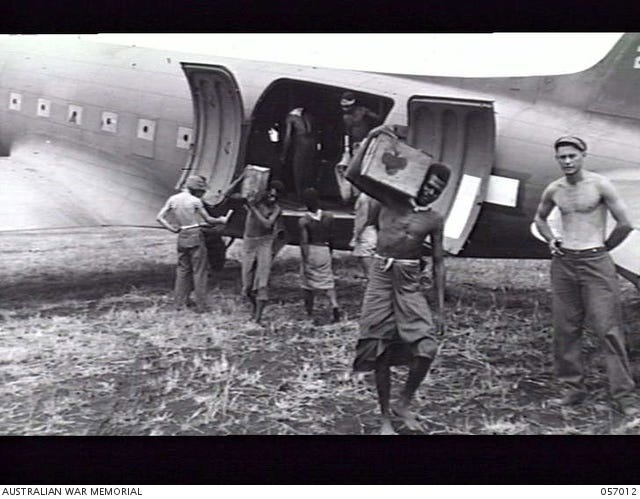
What makes cargo cults interesting is not that people invented a ridiculous belief after seeing nothing at all, but perhaps that they were, in a way, too faithful to what they had actually seen. They had seen airplanes, supplies, runways, control towers, lights, and military equipment. The problem was that what they saw were not the causes of abundance, but the signs that accompanied its arrival. Abundance did not come because there was a runway; rather, the runway existed within a system through which abundance was transported. The control tower, antennas, and headphones did not call supplies into being; they were required by a preexisting system of war and logistics. Yet it is hardly unfamiliar for human beings to grasp visible forms before invisible structures. When someone sees a certain animal behaving in a particular way before rain, they may feel a connection between that movement and the rain. When someone remembers a food they happened to eat or an action they happened to perform before recovering from illness, they may begin to treat it as a condition of recovery. Wearing the clothes one wore on the day of a successful exam, or repeating the routine from a previous victory before an important game, is not so foreign to modern people either. Even when we call such things superstition, there remains within them an old human habit: to hold on to visible signs in order to understand invisible causes.
It is at this point that myth comes to mind. We often learn that myths are stories that explain the origins of the world. But when we actually read myths, they often seem less concerned with asking “what existed in the beginning?” than with asking “why does this happen?” Why do humans die? Why does grain grow? Why does abundance not last? Why is the earth full in one season and empty in another? Human beings do not leave what they cannot understand in a state of incomprehension. They turn it into a story. In that sense, myth and cargo cults may appear to be very far apart, yet perhaps they begin from the same human impulse. Both are attempts to understand how the world works, and more specifically, to understand the causes of abundance and loss. The difference is that while cargo cults reproduced visible forms in order to call abundance back, myth arranges the origin of abundance and the reason for its disappearance in the form of a story.
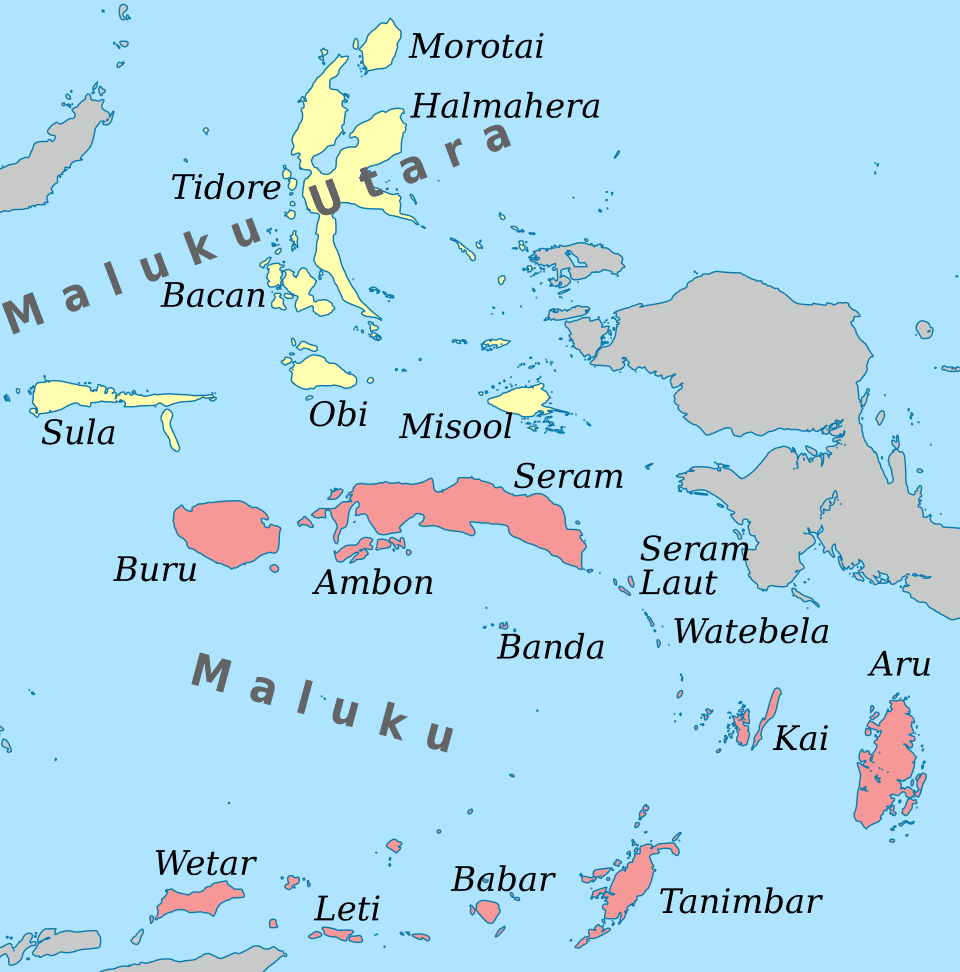
The myth of Hainuwele, told on the island of Seram in the Maluku Islands of Indonesia, is a particularly strange and powerful case for thinking through this question. The Hainuwele myth became widely known through the work of the German ethnologist Adolf Jensen, who recorded it after conducting fieldwork on Seram in the 1930s. From the beginning, the story is filled with strange scenes. A man named Ameta finds a coconut and plants it, and from that coconut a special girl is born. Her name is Hainuwele. Hainuwele is no ordinary human being. She produces valuable objects through defecation. During a festival dance, people receive the precious things she gives out, but eventually they push her into a pit and dance over it, packing down the earth until she dies. Afterward, her body is buried, and plants grow from it. Within Jensen’s interpretive framework, these plants are connected to the origins of the major foods humans live on, especially tubers and root crops.
When one first reads this myth, the strange things naturally appear first. Why is a girl born from a coconut? Why does she produce valuables through defecation? And above all, why do people kill the very being who brings them abundance? The motifs of this story are openly bizarre, and perhaps for that reason they remain in the mind even longer. To a modern sensibility, Hainuwele producing valuables through defecation may feel dirty or unpleasant, but within the myth it marks a strange point where the filthy and the precious, the inside of the body and social value, natural production and cultural exchange, all become entangled. She is not simply someone who possesses valuables; she is someone who creates value through her own body. The problem is that this value is not produced in any way the community can understand. She does not labor, cultivate, craft, or trade, and yet abundance comes from her—too easily, too directly, and in too strange a manner.
In this respect, Hainuwele’s abundance resembles the supplies of the cargo cults. Both arrive in ways the community cannot understand. In cargo cults, supplies come down from the sky. In reality, of course, they were the result of war, logistics, and industrial production, but to those who could not see that whole system, they must have seemed like abundance granted from above. Hainuwele’s valuables are similar. They do not grow in a field, they are not made by hand, and they are not exchanged in a market; they suddenly emerge from the body of a girl. In both cases, the important point is not only that abundance has arrived, but that the principle behind that abundance cannot be understood. Incomprehensible abundance is a blessing, but it is also a source of anxiety, because human beings may want good things, yet cannot fully feel at ease with them if they do not know where they came from.
Perhaps human beings fear excess as much as they fear lack. Scarcity is painful, but unexplained abundance also produces unease. A gift whose origin, reason, and possible cost remain unknown is not a pure blessing; it can also become a threat. Hainuwele enriches the community, but at the same time she unsettles the order the community knows. If a society is built upon labor, exchange, and reciprocity, then valuables that pour out without payment or process make that order unstable. It becomes unclear who produced what, who owes whom, and through what kinds of relationships objects should circulate. She is the solution to lack and, at the same time, a threat to order. For that reason, Hainuwele’s death can be read not simply as a story of a community jealously killing a benevolent being, but as an event in which human society removes an abundance it cannot bear and transforms it into a form it can understand.
Here, Jensen’s concept of the “dema deity,” which he used to explain the Hainuwele myth, becomes important. A dema deity is a concept used to describe a type of myth in which a divine or transcendent being is killed or dismembered, and from that body emerge the major food plants on which human beings live. Hainuwele is often cited as one of its representative examples. While alive, she produces valuables in a way the community cannot understand; after death, she becomes the origin of plants that humans can eat and live on. In other words, Hainuwele’s death may be read not simply as a sacrifice or punishment, but as an event in which incomprehensible abundance is transformed into a kind of abundance human society can bear. The strange abundance of valuables pouring out through defecation is converted, through death and burial, into the abundance of food.
This structure becomes easier to understand when viewed from the perspective of an agricultural society. Modern people can explain germination biologically, but for farmers in a time before such knowledge, what unfolded before their eyes would not have been a scientific concept but the phenomenon itself. A seed enters the ground, disappears from sight, remains unseen for a while, and when winter comes the earth freezes, the fields empty out, and life seems to stop. The seed appears to have died. Then at some point a sprout rises from the ground, what had been invisible becomes visible again, and what had disappeared returns in another form. What the farmer witnessed every year may have been not merely a process of growth, but a repetition of disappearance and return, extinction and transformation. In that sense, imagining the origin of plants in relation to death is not simply strange. It may be a way of translating the phenomena of agriculture into a story human beings could understand.
What matters in the Hainuwele myth is that death is not treated as an ending. Hainuwele dies, but she does not disappear completely. Her body is buried in the earth, and from that place plants grow. Human beings eat those plants and live. Death here is not an event on the opposite side of life, but a passage through which life appears in another form. The girl who brought abundance vanishes at the hands of the community, but that disappearance is not an absence that leaves nothing behind. It becomes the origin of the food by which human beings survive.
This is not because human beings loved death, but perhaps because death was the most intense event that demanded explanation. Presence is familiar, but absence is shocking. What is alive already exists beside us, and for that reason it can feel natural, even ordinary; but when something that existed is suddenly gone, human beings begin to ask questions. We do not think much about health when we are healthy, but when we fall ill, we remember health. When someone we love is beside us, we may take their presence for granted, but after they leave, we dwell on the empty space they left behind. Perhaps human beings are more sensitive to loss than to presence. Why did it disappear? Where did it go? Is it truly over? In an agricultural society, these questions would not have applied only to human death. Seeds disappear into the earth, the abundance of the field is emptied with the harvest, and the green that once covered the world withdraws before winter. Yet what seemed to have vanished returns at some point in another form. The Hainuwele myth answers this question by saying: what disappears remains in another form.
Still, the appeal of the Hainuwele myth is clear. It shows how human beings create stories in order to explain phenomena they cannot understand. The farmer may not have known why seeds grow, but he saw seeds disappear and return, saw the stillness of winter and the recovery of spring, saw the earth appear dead and then become alive again. Myth explains this phenomenon by saying: someone died, and from that death plants were born. This is not a scientific explanation, but it is an explanation that gives meaning to the world. If the runway of the cargo cult was a form meant to call airplanes back, then the Hainuwele myth is a narrative form meant to understand why plants grow. The two belong to entirely different times and cultures, but they resemble each other in the way human beings create devices of explanation in the face of incomprehensible abundance and its disappearance.
Returning to Hainuwele, the strangest question remains: why did people kill her? There is no single definitive answer to this question, though several interpretations are possible. One is that Hainuwele was a being of excess that human society could not endure. She produces valuables without labor. If society rests upon systems of exchange, labor, and reciprocity, then Hainuwele’s abundance threatens that order. She enriches the community, but at the same time she produces wealth in a way the community cannot understand or control. Human beings fear scarcity, but sometimes they also fear an excess they cannot understand. In that sense, Hainuwele’s death can be read not simply as an act of jealous violence, but as an event in which human society eliminates an unbearable abundance and transforms it into the comprehensible form of food.
This is where Hainuwele meets the cargo cult again. The people of the cargo cult experienced an abundance they could not explain. Supplies came down from the sky. They did not arise within their own systems of labor or exchange. The same is true of Hainuwele’s community. Valuables emerge from the body of a girl. This is abundance outside the ordinary laws of production. Both stories place incomprehensible abundance at their center. And in both, human beings do not simply accept that abundance as it is. They search for its cause, reproduce its conditions, turn it into a story, and sometimes remove it before incorporating it back into order in another form. If the cargo cult tried to call abundance back through the runway, the Hainuwele myth explains abundance through the body of a dead girl. One is a ritual that attempts to reproduce abundance; the other is a myth that explains its origin.
In the end, what interests me in this piece is not whether myth is true or false. The fact that the runways of the cargo cult did not actually bring airplanes back, or that plants did not literally grow from Hainuwele’s body, is not the point. What matters is that human beings do not remain still when faced with phenomena they cannot understand. They try to interpret the world. They search for relations between visible things, ask why something has disappeared, and give meaning to repeated phenomena. In that process, stories are born. Of course, stories are always dangerous. A story can explain reality and distort it at the same time. The runways of the cargo cult did not call airplanes, and myth does not explain plant growth scientifically. Even so, human beings needed stories. Faced with abundance and loss they could not explain, they could not remain silent. They asked why it came, why it left, how it might return, whether what disappeared was truly gone. The Hainuwele myth answers in the language of death and plants, while the cargo cult answers in the ritual language of runways and control towers.
That is why the Hainuwele myth stays with me. It is not merely the story of a bizarre girl, but a myth that shows how human beings turned incomprehensible abundance and the process of life into narrative. Just as those who could not understand the supplies that descended from the sky built runways, those who could not understand the origin of plants rising from the earth told a story about the body of a dead girl. Seeds disappear, winter comes, and the earth looks dead. Then at some point plants grow. Human beings wanted to explain that phenomenon. And their explanation took the form of a story about Hainuwele: her body, her death, and the plants born after that death.
Returning once more to Feynman’s speech, cargo cults are introduced as failed imitations of science. Yet they are also scenes in which human beings tried to explain an abundance they could not understand. People who did not know why airplanes had come built runways, and people who did not know why plants rose from the earth spoke of the body of a dead girl. These stories may all have been wrong. But they are also evidence that human beings were not completely powerless before the world. They tried to understand what they did not understand, and in that attempt, myths, rituals, and stories were born.
Addendum. The Hainuwele myth and the concept of the “dema deity” became widely known through the work and interpretation of the German ethnologist Adolf Jensen, based on his research on the island of Seram. In this essay, the concept of the dema deity is used as one interpretive framework for understanding the structure of the Hainuwele myth, not as an acceptance of Jensen’s entire theory as settled scholarly consensus. Jensen’s interpretation has been criticized for the risk of generalizing from a specific local myth into a broad model of agricultural mythology, and for placing a comparative-religious framework of “dying deity” and “origin of food plants” ahead of the social and ritual meanings the myth may have held within the actual community. Therefore, while Hainuwele can be read as a representative example of a dema myth, caution is needed when extending that interpretation into a universal law of agricultural myth.
References
• Richard P. Feynman. “Cargo Cult Science.” Caltech Commencement Address, 1974. Reprinted in Engineering and Science, California Institute of Technology.
• Encyclopaedia Britannica. “Hainuwele.”
• Encyclopaedia Britannica. “Dema deity.”
• Adolf E. Jensen. Hainuwele: Volkserzählungen von der Molukken-Insel Ceram. 1939.
Image Credits
• Tim Ross. Ceremonial cross of the John Frum movement, Tanna Island, New Hebrides, now Vanuatu, 1967. Wikimedia Commons, CC BY 3.0.
• Australian War Memorial. “Nadzab Airstrip, New Guinea. 1943-09-18. Local people unloading supplies from aircraft.” Public domain photograph.
• Oona Räisänen. Map of the Maluku Islands, including Seram. Wikimedia Commons, CC0 1.0 Universal Public Domain Dedication.
AI Use Disclosure
AI was used as an editorial aid in the process of translating, locating academic references, and organizing section headings. The central argument, interpretation, and final editorial decisions are my own.