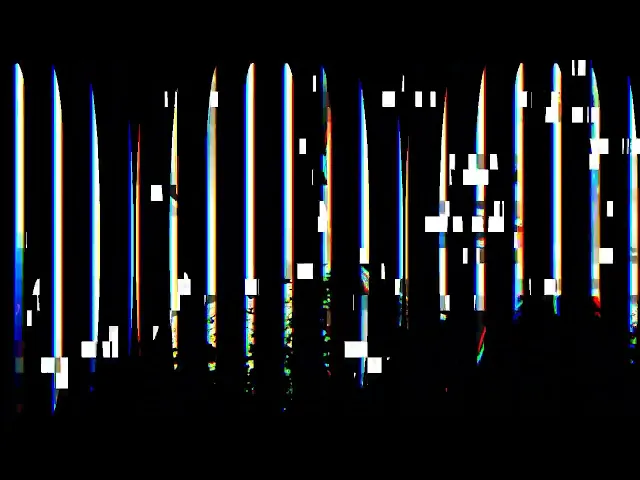
TouchDesigner Experiments
Real-Time Visual Systems · Creative Coding
I explored TouchDesigner through a series of independent experiments driven by my interest in live and interactive installation art. These experiments included extracting and mapping the human body with MediaPipe to create real-time visual responses to movement, developing audio-reactive visuals, and layering multiple video sources to test pixel sorting, distortion, and feedback effects. Together, these studies examined how sensory data, such as sound and motion, could be translated into dynamic visual expressions within a live environment, expanding my approach to time-based and spatial media.
This experiment used live camera footage and pixelation effects to juxtapose the subject’s real face with simplified geometric abstraction. It explored the minimal visual information required to maintain human recognition while blending realism and abstraction.
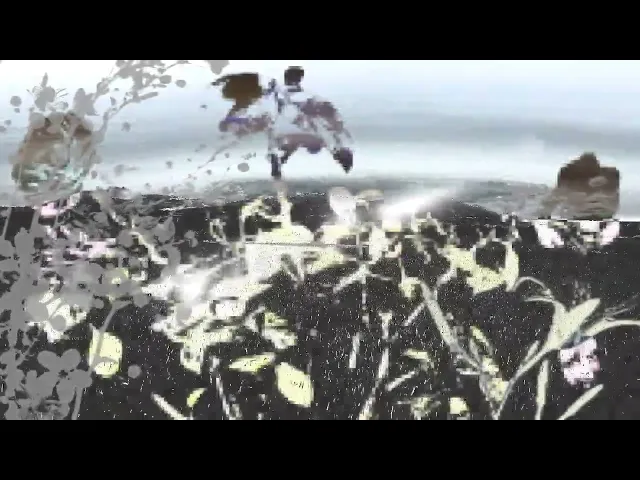
Inspired by the muted winter scenery outside a window, this experiment used the sound of breath to modulate a visual scene. As the breath grew stronger, the image turned white, as if frost were filling the window; as it faded, the distorted landscape reappeared. The entire process, from video distortion to tonal adjustment, was built in TouchDesigner and later combined with a live camera feed so that the performer appeared drawn onto a frosted surface. The experiment examined how sound data could shape visual atmosphere and translate subtle emotional changes into environmental imagery.
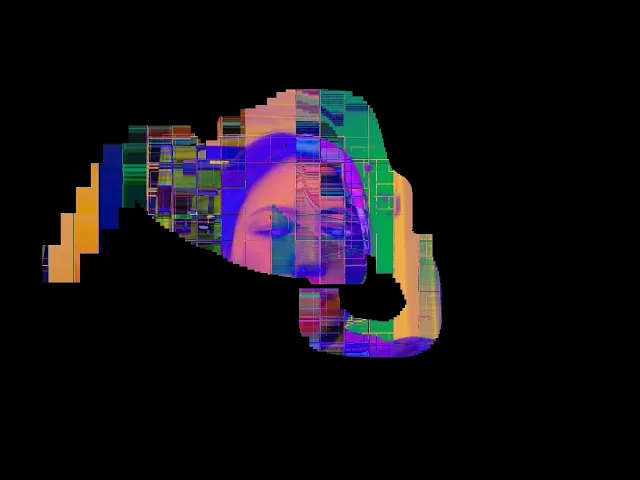
This experiment created an interactive camera scene in which users could “draw” on the screen with their fingers, revealing a pixelated and distorted version of the live feed through their gestures. It investigated the potential of gesture-based interfaces for real-time visual transformation.
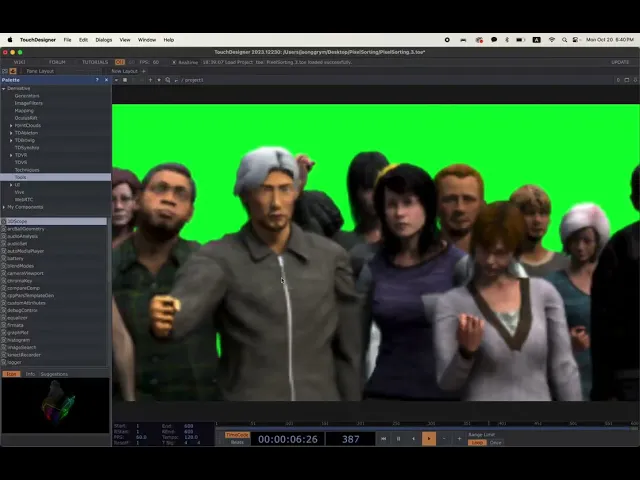
As part of an editing experiment, I created a sequence in which pressing the keyboard key “1” switched between scenes distorted through a feedback loop. The work tested how simple input signals could simultaneously control transitions and generate evolving visual feedback.
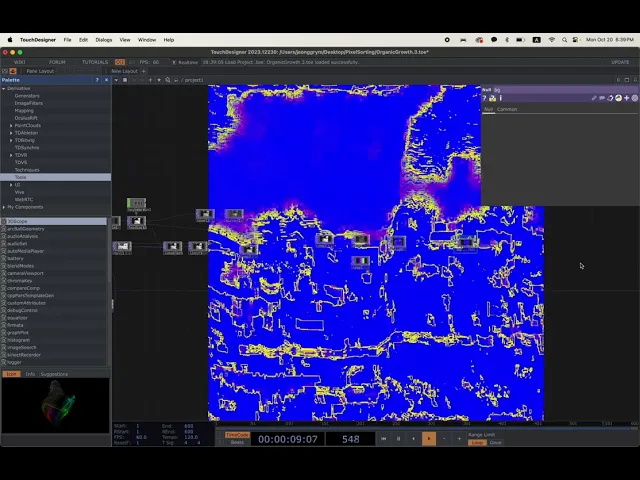
This experiment produced visuals based on datamoshed imagery that distorted and recovered according to the motion of an LFO graph, resembling the interference of a circuit-bent television screen. It explored the rhythmic aesthetics of digital noise and signal instability as a visual language.