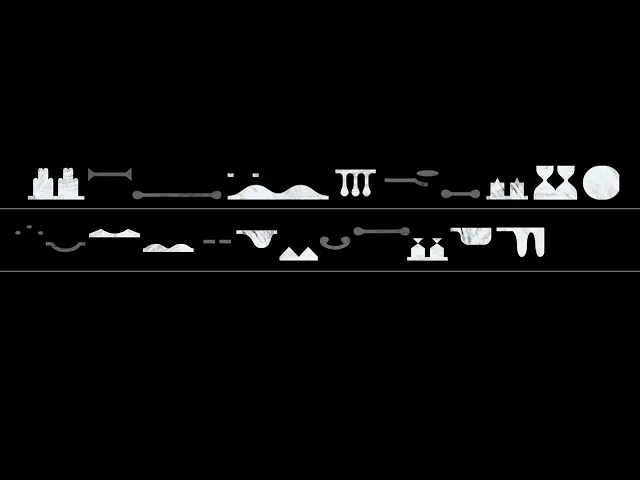
The Pattern of Sadness
Research Project
The Pattern of Sadness explores how grief changes as it is translated into visual and sonic systems. The project began by observing the subtle physical sensations that accompany crying and recording them through drawings, diagrams, and symbols. These visual records gradually evolved into sound compositions and a looping audiovisual work, where repeated observations accumulate into a structured pattern. Rather than expressing grief directly, the project investigates how a subjective emotional experience can be observed, recorded, translated, and reorganized through a repeatable system.
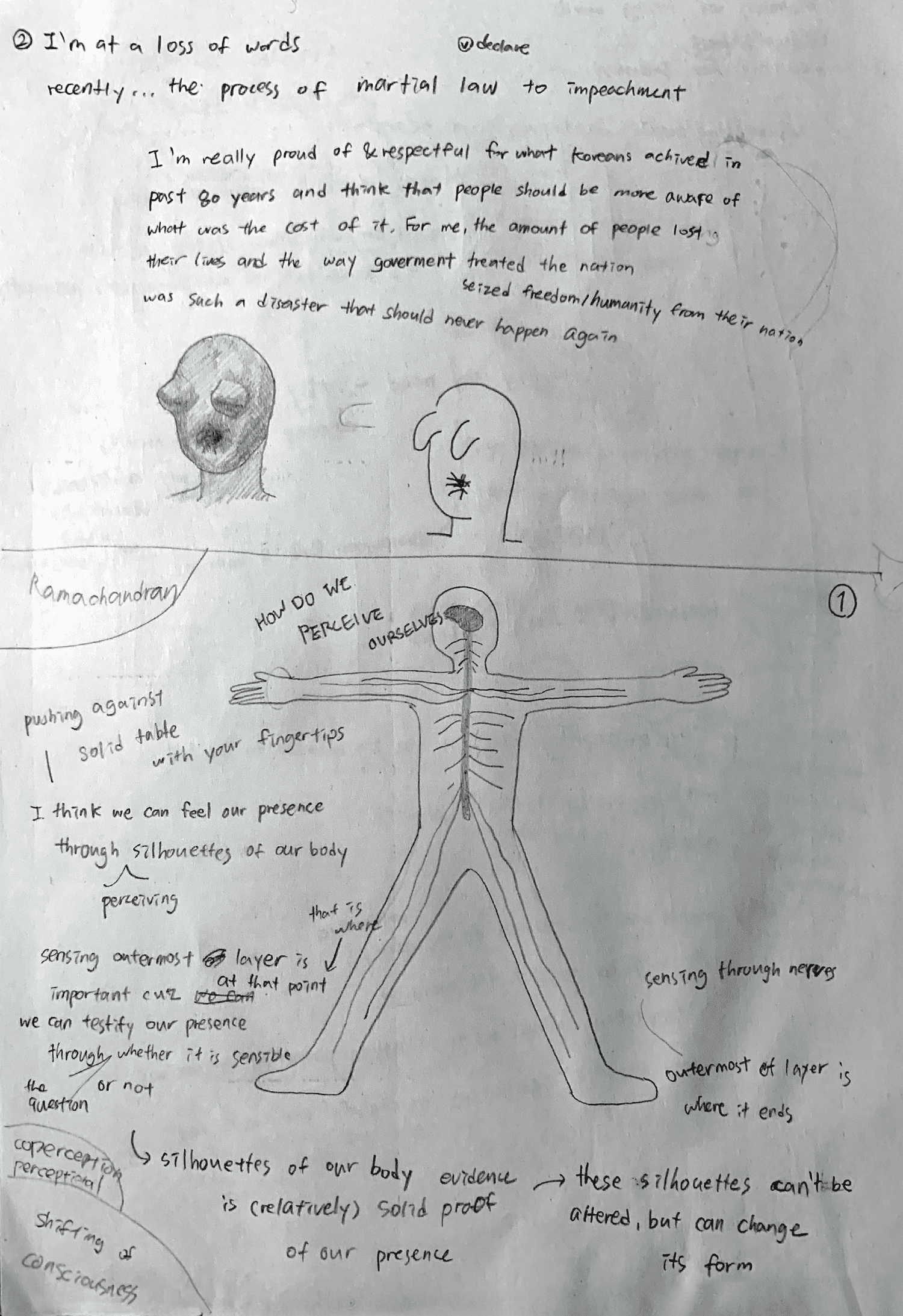
This exploration began with a simple question: How do we perceive ourselves?
I became interested in the boundary between physical sensation and emotional experience, and in how subtle changes in the body might make an internal state perceptible. I began paying closer attention to what happened physically when sadness built or tears began to form: shifts in pressure, tension, weight, and the perceived outline of my body.
I have a personal ritual for releasing sadness. Whenever I feel emotionally overwhelmed, I play a film that reliably makes me cry and continue watching until I feel exhausted. By repeating this routine under similar conditions, I began to observe and record the bodily sensations that accompanied each crying session.
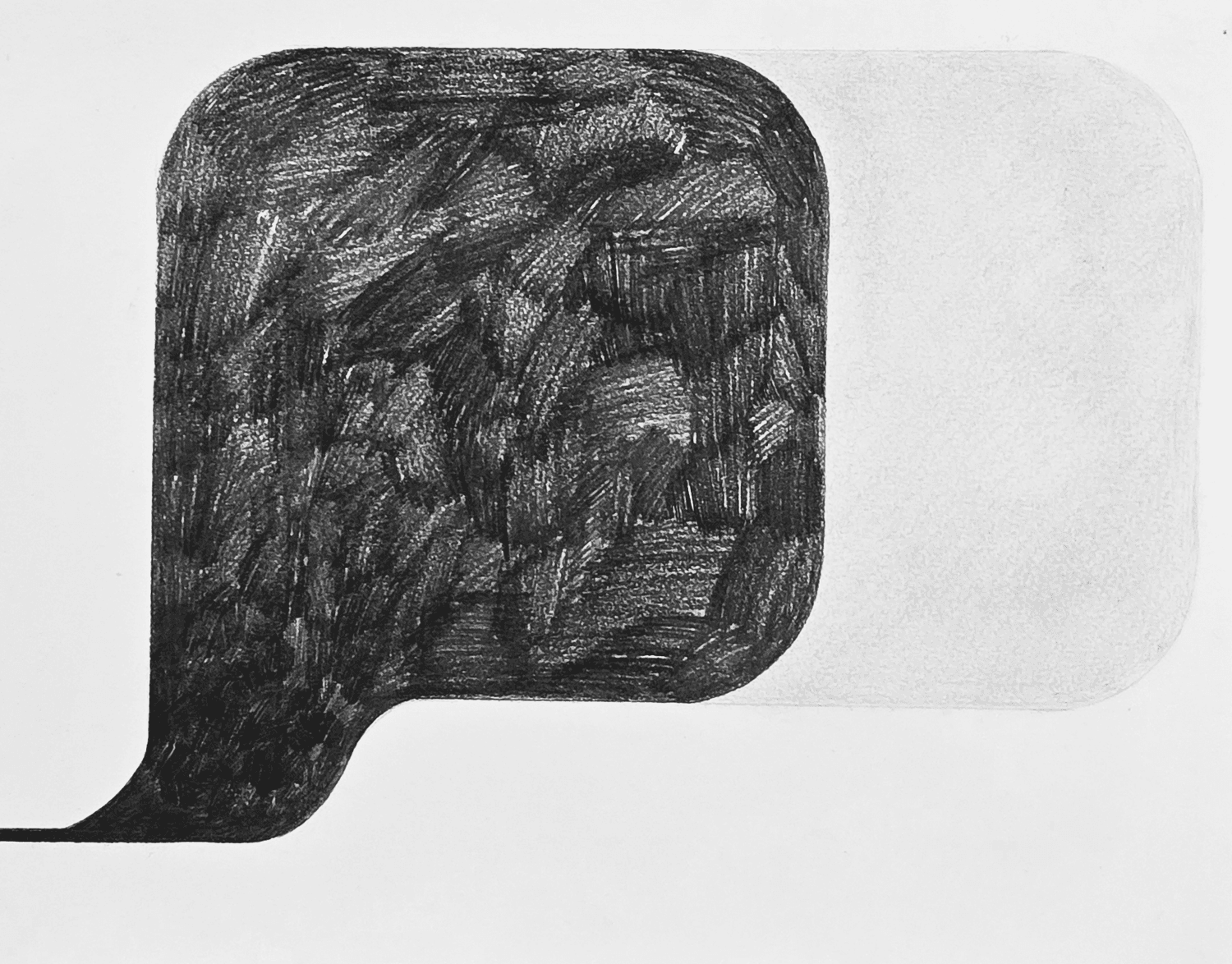
The changing weight of my emotions
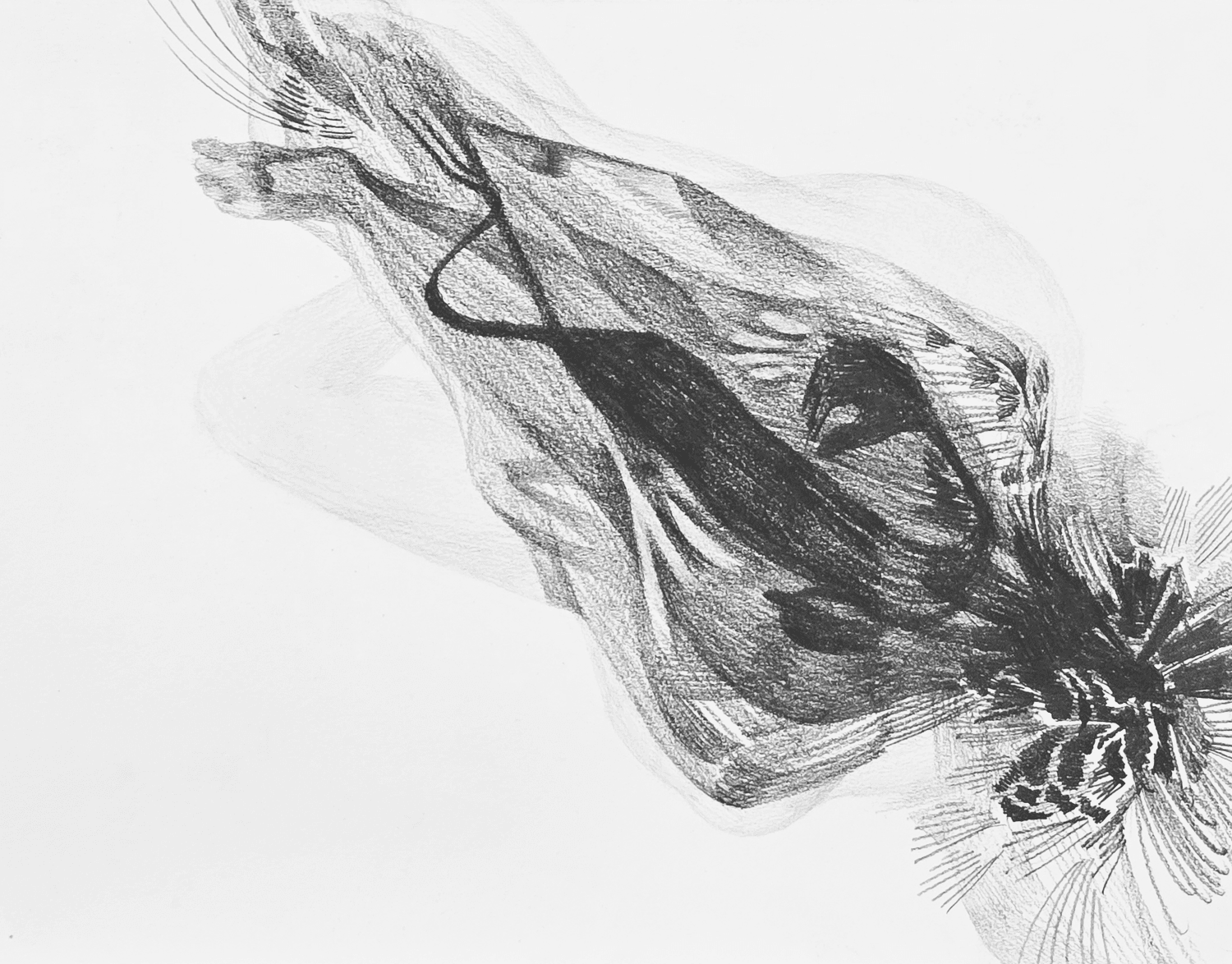
The shifting outline of my body
I first translated these observations into a series of pencil drawings, recording the perceived outline of my body during my sadness ritual, the changing size of my emotions or brain, the weight that builds before crying, and the sense of lightness that follows afterward. Through repeated drawing, I wanted to see whether a deeply personal emotion could gradually become a more structured and observable pattern. The repetitive process itself became an important part of the research, recalling the meditative quality of manual labor or ritual practices, where meaning emerges through repetition. Pencil felt like the most appropriate medium because its texture directly records pressure, direction, and duration, leaving a visible trace of the time and attention involved in each observation.
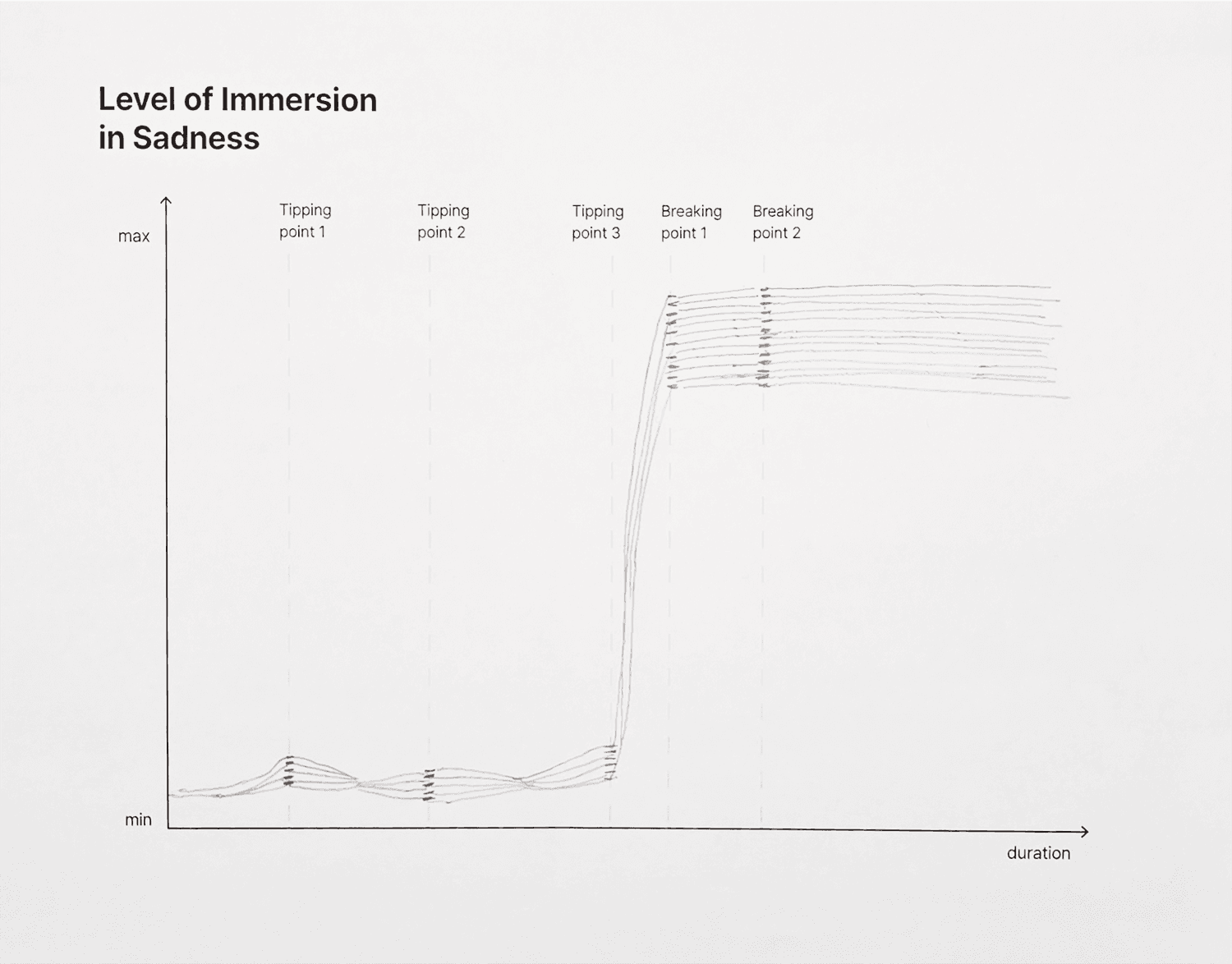
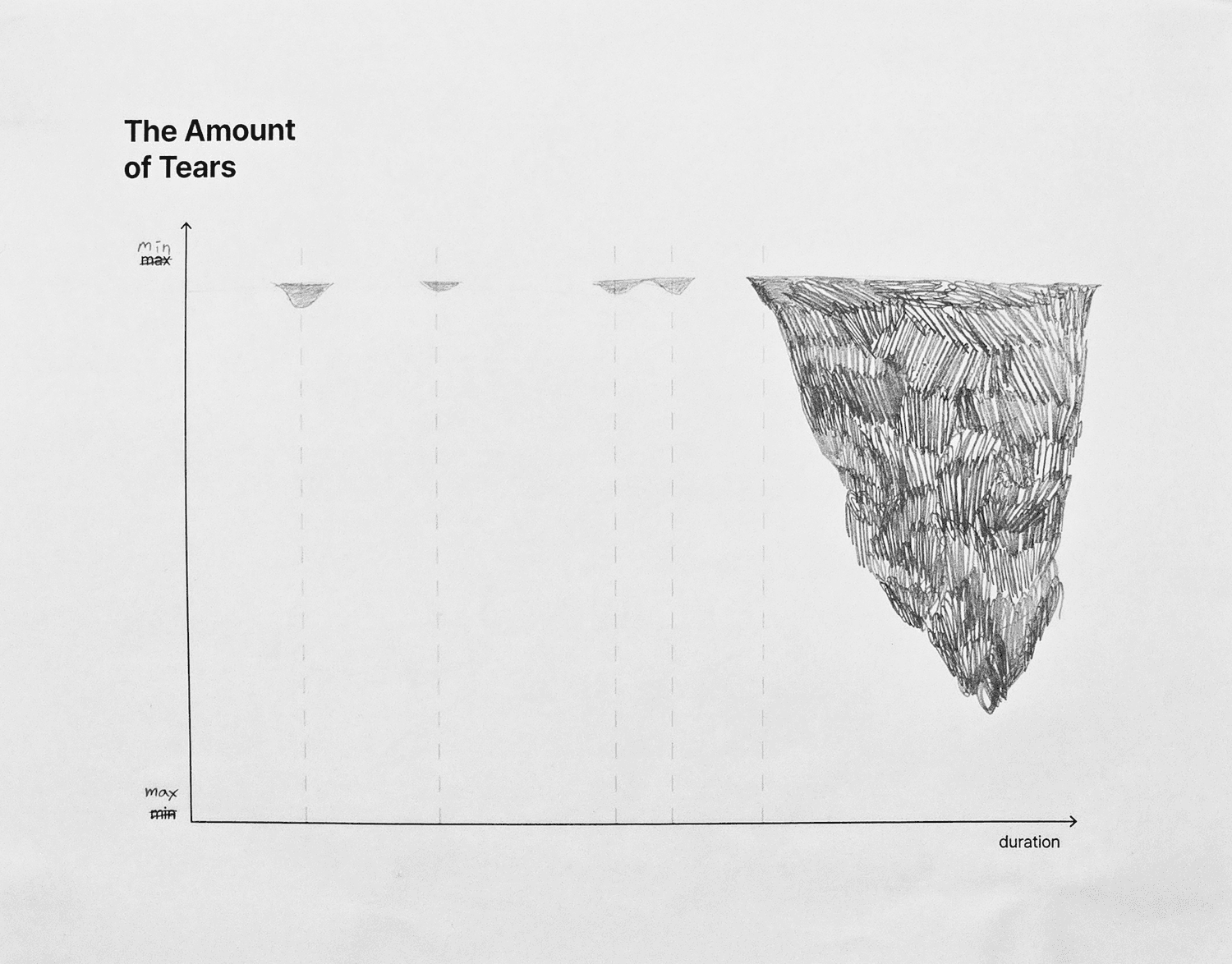
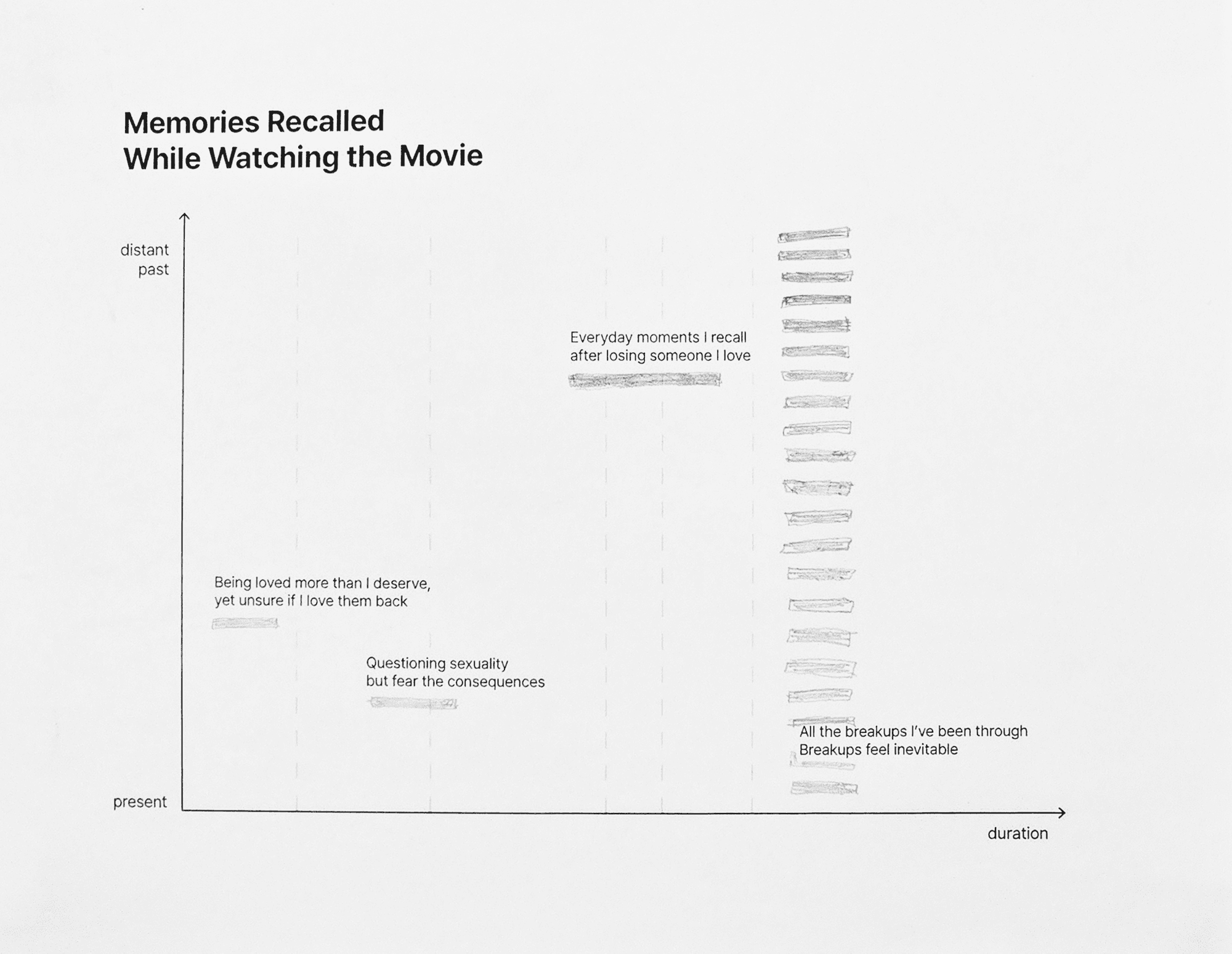
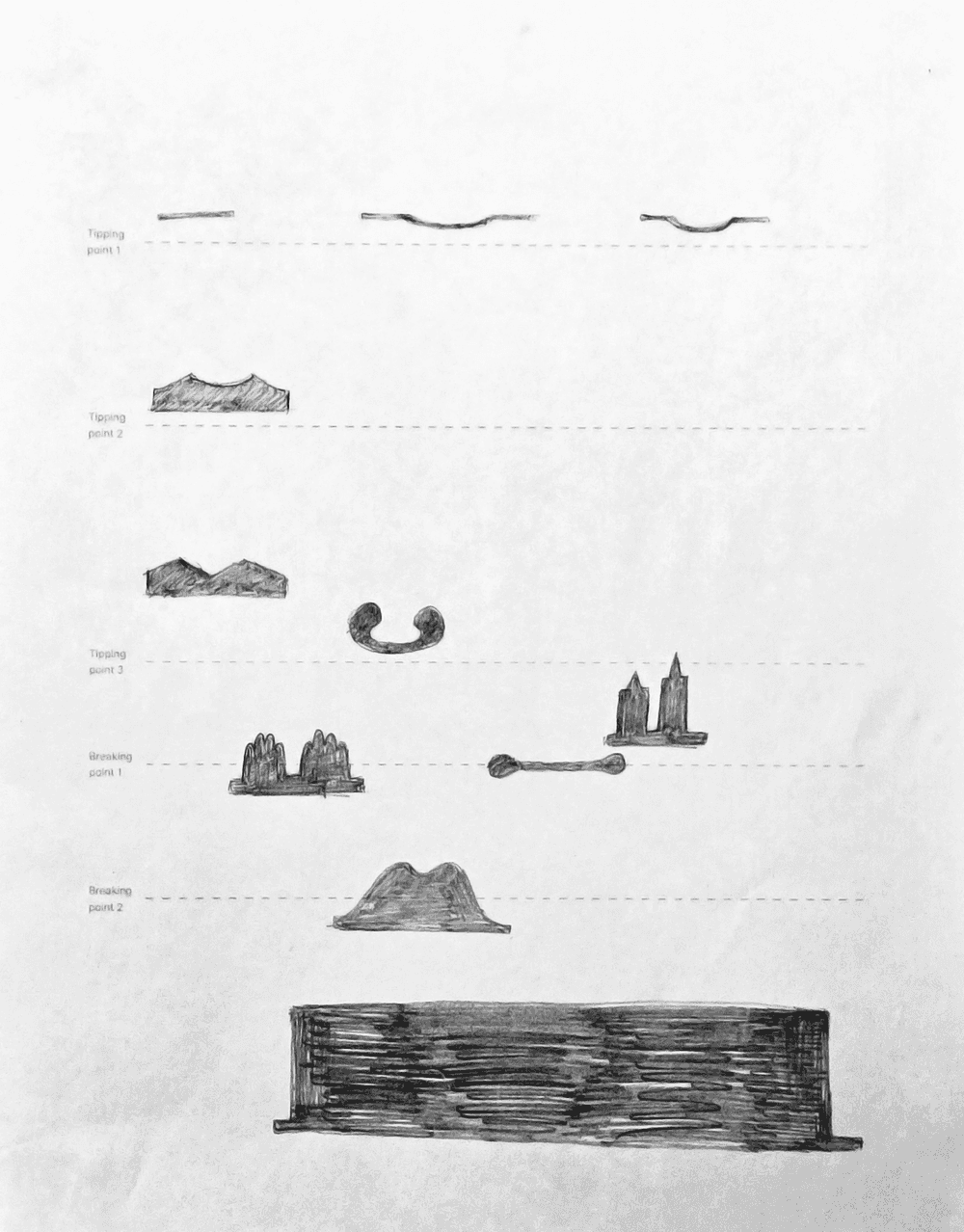
Afterward, I began recording these observations more systematically using graphs. Based on these records, I developed a series of symbols to describe the physical sensations I perceived at different moments during the ritual. For instance, a shape resembling two sharp pyramids joined together represents the sensation of pressure building around my tear glands just before crying, while an arc with circles at both ends represents the tension in my lips as I try to hold back tears.
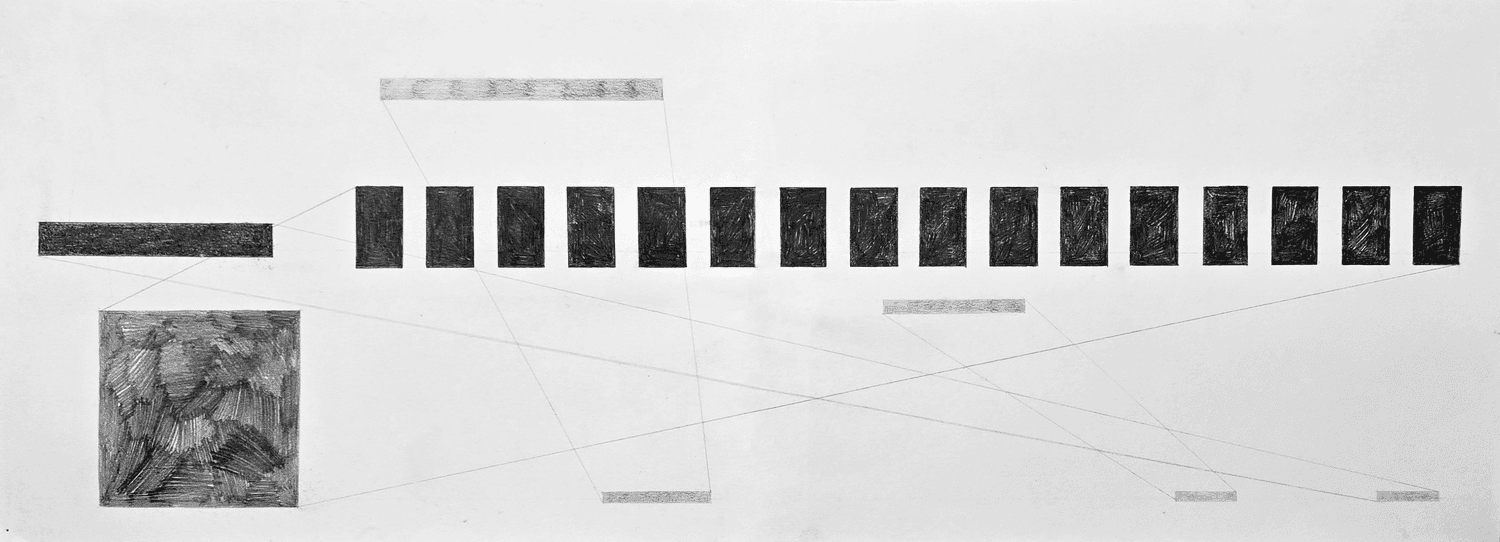
The recalled timeline and emotional intensity corresponding to the sequence of the film
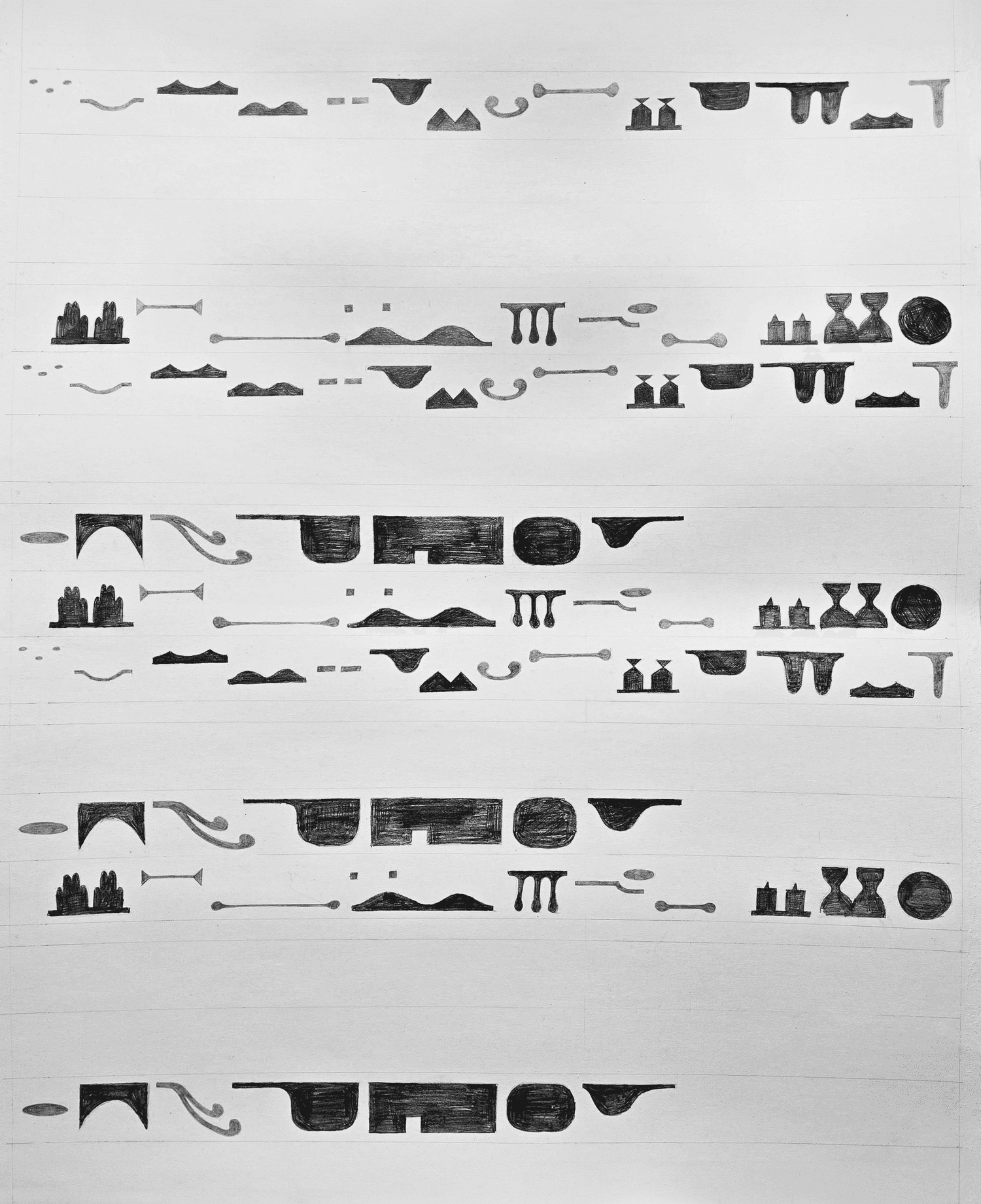
A musical score designed for a round
I then organized these symbols into a condensed visual sequence and developed them into a circular musical score, reflecting the repetitive and meditative structure of the ritual. After developing the score, I began exploring the reverse process: how each visual symbol could be translated into sound.
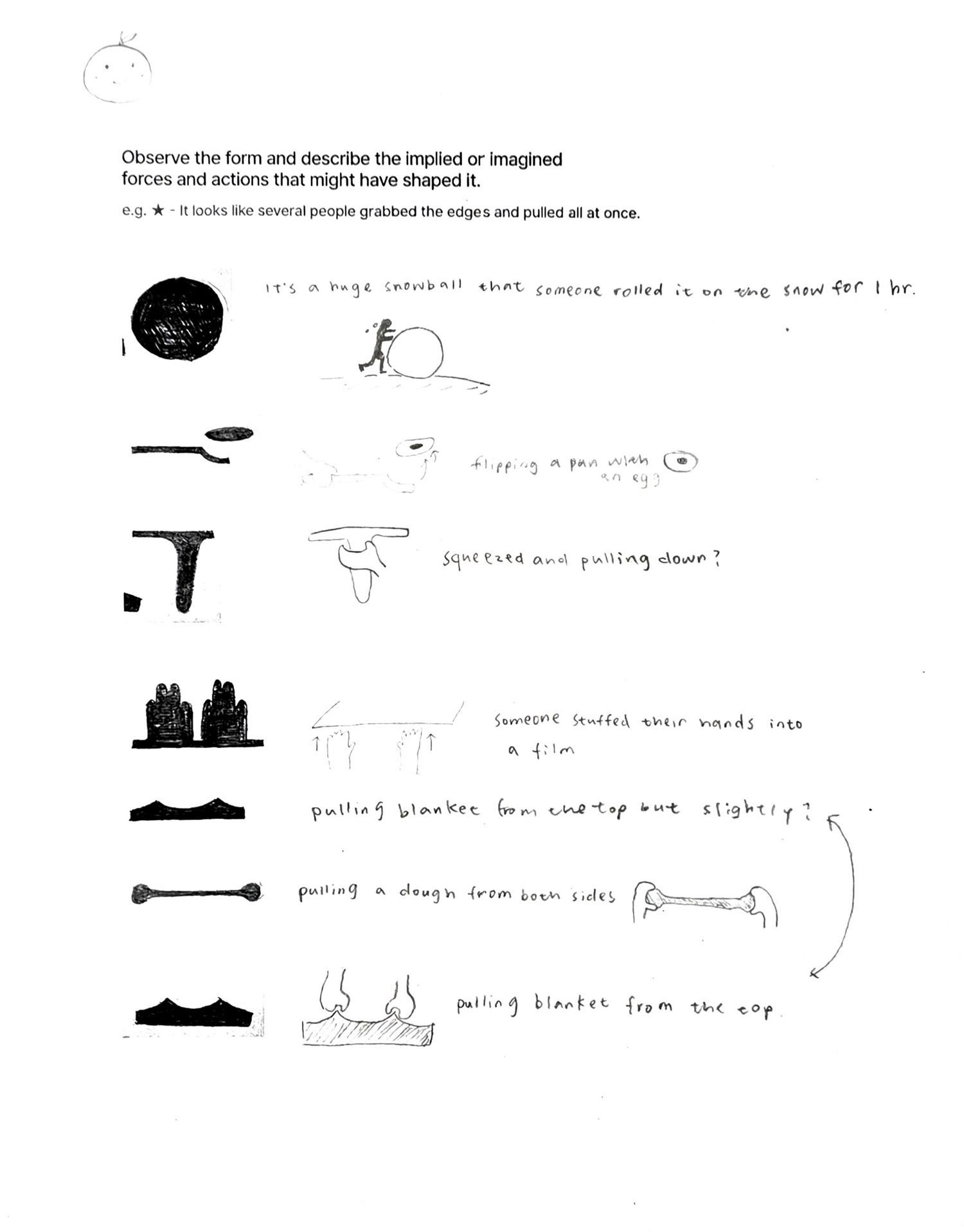
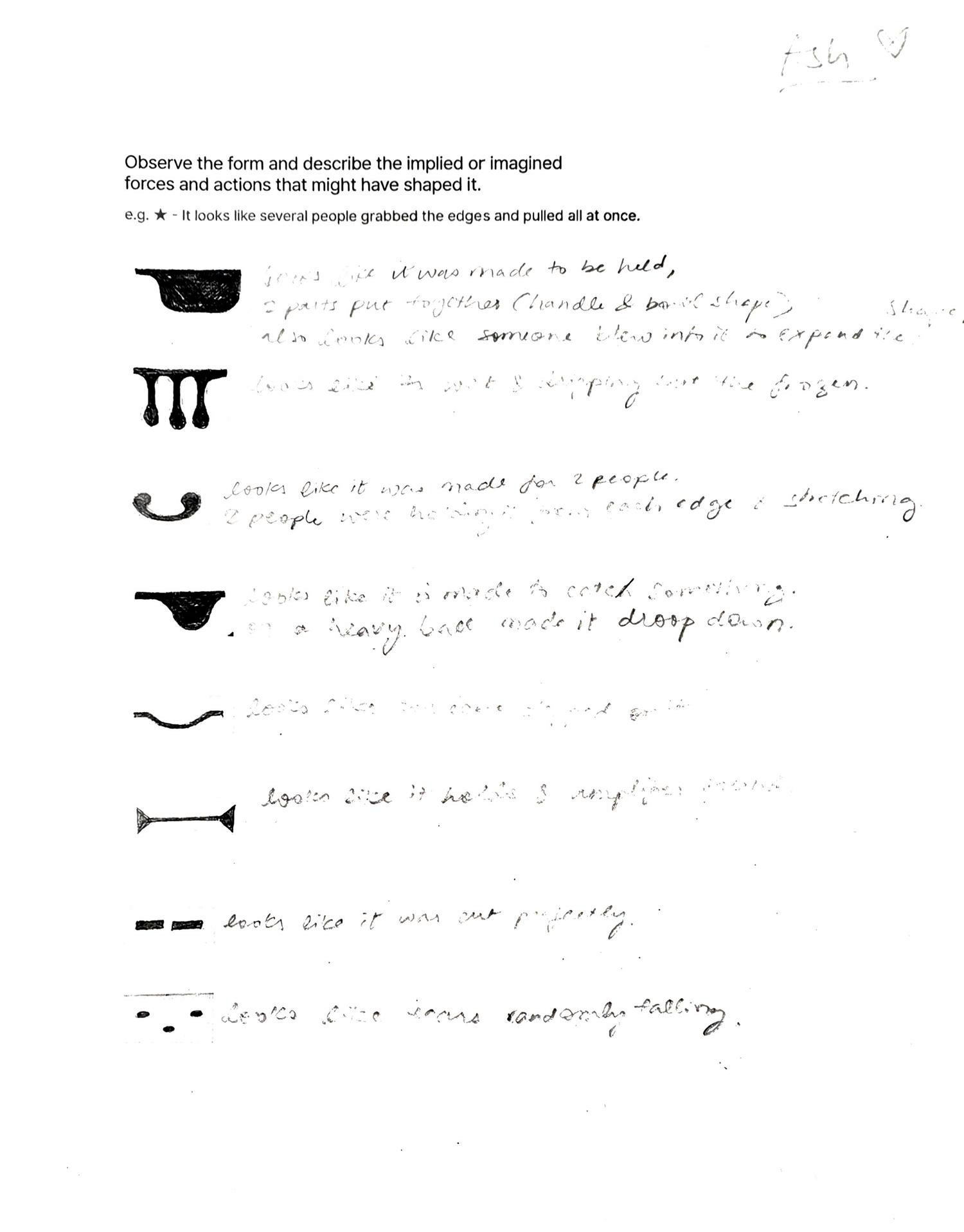

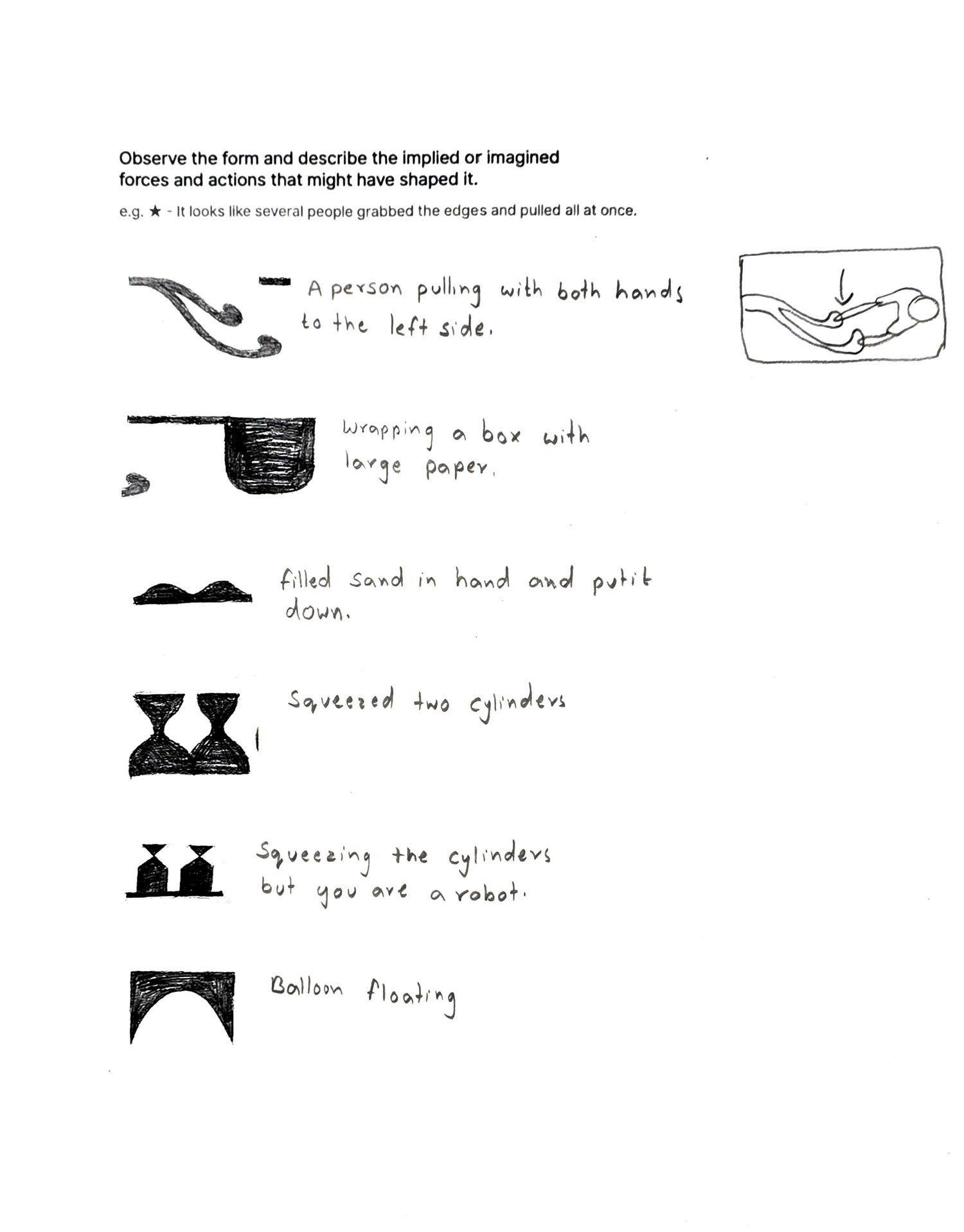
As the research developed, I used Ableton Live to create sounds corresponding to each symbol. Since this was my first time working with music production software, the process involved a great deal of trial and error. It also became an important part of understanding how visual qualities such as shape, density, rhythm, and duration could be translated into sound.
I then combined the visual and sonic elements into a single video piece. This version functions as an audiovisual prototype, testing how the symbols and sounds accumulate over time.
Through this project, I have been examining how emotion changes as it is translated from bodily sensation into drawing, symbol, sound, and moving image. I am also interested in how repetition can operate as a compositional structure, a method of observation, and a means of creating distance from a personal experience.